


Most players miss Harrison’s subtleties; I’ll guide you through phrasing, tone, and melodic restraint so you can internalize his approach. I explain picking dynamics, economical note choices, slide techniques, and tasteful use of effects while giving practical exercises you can apply to your practice sessions. Follow my step-by-step tips and you’ll develop the feel and phrasing that defined his sound.
Understanding George Harrison’s Guitar Style
I zero in on Harrison’s economy: short, memorable phrases, tasteful slide, and a bright jangle that sits just behind the vocal. You’ll hear that in the 1964 Rickenbacker 12-string riff on “A Hard Day’s Night” and in the spare, lyrical solo on “Something” (1969). I emphasize tone – scooped mids, chimey treble, light compression – and phrasing that treats each 2-4 bar motif as a melodic sentence rather than a showy run.
Key Elements of His Technique
I break his technique into concrete parts: concise single-note melodies, selective double-stops, subtle vibrato, and precise slide work. You can practice 2-4 bar motifs, use major pentatonic and diatonic melodies, and add tasteful slides into chord tones like on “My Sweet Lord” (1970). I recommend clean amp settings (Vox AC30-style chime), light reverb, and guitars like Gretsch or Rickenbacker to reproduce that balanced sustain and articulation.
Influential Genres and Artists
I trace Harrison’s voice to Indian classical music (studied with Ravi Shankar, evident on “Within You Without You,” 1967), Hank Marvin’s melodic single-note lines, and early American rock & roll and rockabilly (Chuck Berry, Carl Perkins). You’ll find his phrasing blends sitar-like ornamentation with Hank Marvin’s clean attack, plus the rhythmic drive of 1950s rock – a hybrid that shaped his choices across Beatles and solo work.
I expand on that blend: Indian modes and drone concepts led me to emphasize sustained tonal centers and micro-ornamentation in your leads, while Hank Marvin taught Harrison economical, memorable hooks with controlled tremolo and vibrato. Additionally, the rockabilly influence gives his picking a percussive attack; practicing short, repeated motifs from 1956-1964 rock standards will reveal how he turned influences into concise, song-serving lines.
Essential Gear and Equipment
I focus on a handful of instruments and rigs to get Harrison’s tone: Gretsch Country Gentleman and Rickenbacker 360/12 for that mid‑’60s jangle, plus a Fender Strat for later slide work. I also study his use of Vox AC30 amps and tape‑echo techniques; for deeper study I point you to Style of George Harrison (JamPlay) – John Auker, which breaks down his gear and settings.
Guitars That Defined His Sound
Rickenbacker 360/12 delivered the signature jangle on “A Hard Day’s Night” while Gretsch Country Gentleman supplied hollow, mid‑forward tone on mid‑’60s tracks. I recommend you study those instruments’ string gauges and pickup heights; matching their setup reproduces Harrison’s balance between chime and rhythmic clarity.
Amplifiers and Effects Pedals
Vox AC30s are the backbone: 30 watts driven by EL84s give the sparkle and harmonic breakup he used. I hear tape‑echo and spring reverb across his records, with modest overdrive or fuzz added sparingly for color rather than constant saturation.
When I chase Harrison’s textures I set the AC30 bright with a touch of top boost and use volume to get natural sag; for slapback I start around 80-150 ms with low repeats, and for rhythmic echo I push to 300-450 ms with two to three repeats. I favor a single, mild overdrive and minimal modulation-his tonal identity comes more from pickup selection, attack, and sparse, well‑placed effects than from complex pedalboards.
Tips for Transcribing His Solos
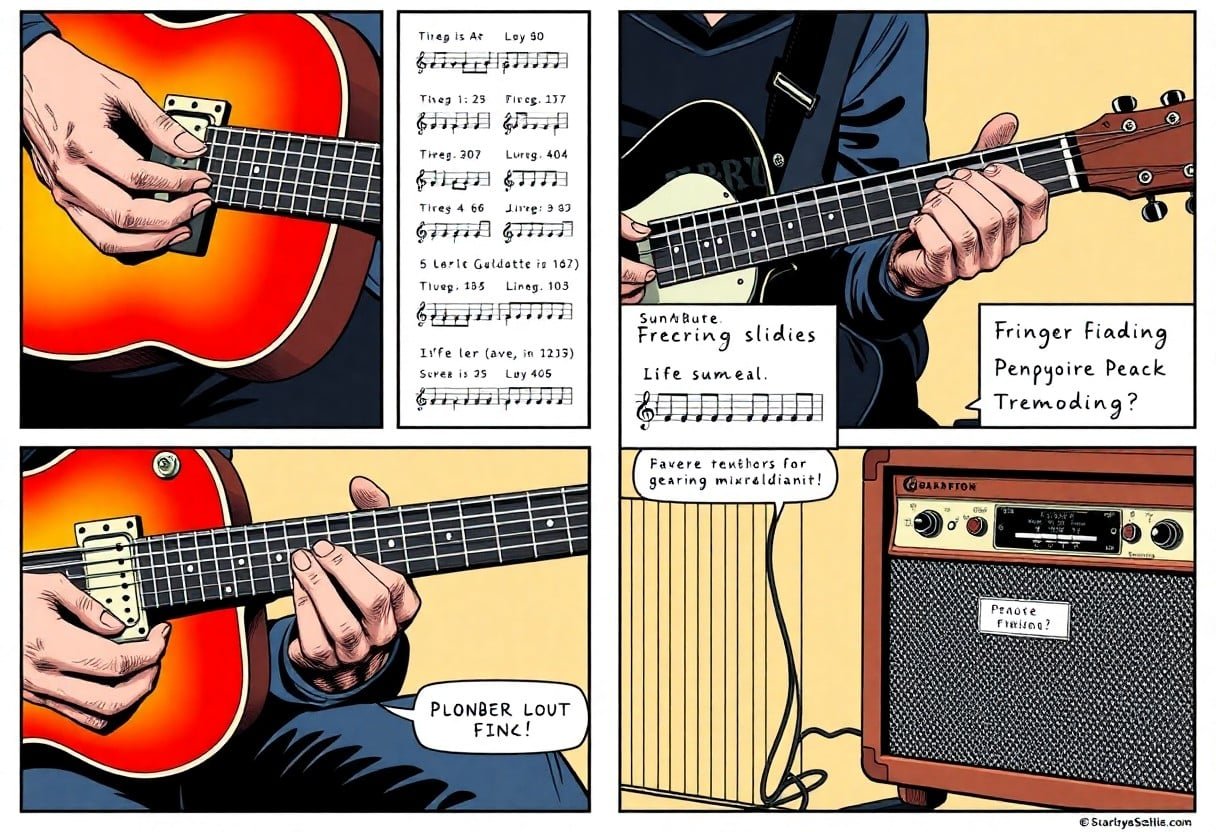
I break solos into 4-bar units, loop them at 0.75× and isolate the guitar lines against the rhythm track so I can hear inner voice-leading. I annotate bends, slides, double-stops and grace notes while checking harmonic context, then test fingerings on the neck to match timbre. Recognizing subtle rhythmic placement and muted attacks will make your transcription feel like Harrison’s playing, not just a list of pitches.
- Loop 4-bar phrases at 0.75× and increase in 5% increments.
- Mark chord tones vs. passing notes; label scale degrees.
- Notate articulation: deadened pick, slide length in frets, bend size (½ or whole step).
- Compare alternate takes (studio vs. live) to find consistent choices.
Listening Techniques
I A/B studio and live versions to hear different phrasings, then use a DAW to loop and slow sections while counting subdivisions (1 e & a) to capture Harrison’s micro-timing. I often set tempo between 60-80 BPM for slow practice, check a spectrogram for ambiguous pitches, and isolate 4-bar motifs to focus on dynamics and articulation instead of trying to transcribe an entire solo at once.
Note-by-Note Breakdown
I transcribe into tab and standard notation, marking exact frets, bend amounts (½ or whole step), slide distances, and rhythmic values down to 16th-note triplets. I label target chord tones, approach notes, and ghost notes, then align each note to the beat grid so your playback matches his phrasing and you can practice with a metronome accurately.
When I expand a phrase I annotate scale degrees and tonal function-e.g., motif targets 1-3-5 over the IV chord-assign fingerings, indicate slide lengths in frets, and mark dynamics (soft attack vs. hard attack). I add DAW measure numbers or timecodes and suggest practicing each motif in 10-15 minute focused repetitions at 0.75×, then at performance tempo to internalize timing and tone.
Factors to Consider When Imitating His Style
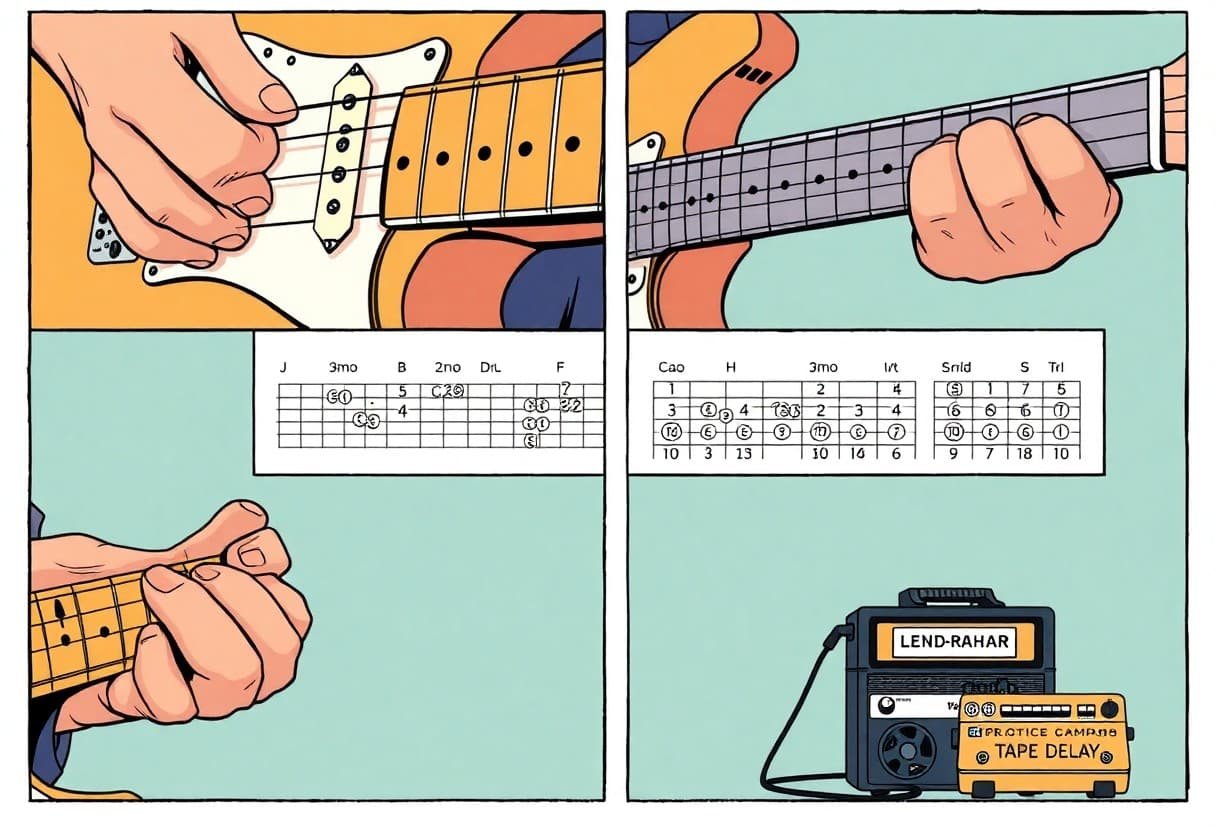
When I dissect his playing I track several interacting factors that shape each phrase: timbre, rhythmic placement, note choice and restraint; I also cross-reference era-specific gear-see 4 ways to play guitar like early Beatles era George Harrison. I break this down into key points:
- equipment and amp voicing
- use of space, slides and double-stops
- micro-timing and supporting the vocal
After I prioritize small motifs, economy and dynamic shading to make phrases sing.
Tone and Dynamics
I chase Harrison’s chiming voice by dialing a bright amp-Vox AC30-style top end-with low gain, scooped mids and short reverb; I set presence around 8-12 o’clock and add a slapback delay (80-120 ms) for early-era shimmer. I favor bridge or bridge+neck pickup blends, light pick attack, and use the guitar volume to roll back for softer rhythm parts, adding subtle compression or gentle tape saturation to even peaks without killing natural touch.
Phrasing and Timing
I place many lines just behind the beat-roughly 20-60 ms-to get that relaxed Harrison feel, favor 8th-note syncopations and 16th-note grace fills, and lean on slides and double-stops into chord tones. Study specific tracks: “If I Needed Someone” for octave-harmonized fills and “Here Comes the Sun” for displaced accents; I loop four-bar units at 0.75× to lock down micro-timing and phrasing nuances.
To deepen phrasing I transcribe the exact pickup and resolution of his motifs, then practice them in three contexts: on the downbeat, swung, and delayed by 20-60 ms. I isolate double-stops and slide widths, practice ghosted 16th-note anticipations, and use backing tracks to test how a tiny shift (one 16th or ~30 ms) changes the vocal support-doing this reveals where Harrison chose space over notes and why those choices serve the song.
Signature Songs to Practice
Focus on four songs that expose different facets of his voice: “If I Needed Someone” (jangly 12-string parts), “Something” (melodic double-stop phrasing), “While My Guitar Gently Weeps” (emotive bends and the famous Clapton overdub), and “My Sweet Lord” (slide and hymn-like voicings). I practice each for 15-30 minutes, loop tricky 4-bar passages, then consult threads like How to make my guitar sound like George Harrison’s for tone tips.
Iconic Tracks Featuring His Style
Tackle “If I Needed Someone” to nail the 12-string arpeggio and Rickenbacker-like chiming attack; I work on ringing open-strings and precise bar placement. Spend time on “Something” for tasteful melodic double-stops and the tasteful pause-driven phrasing from 1969, and isolate the descending line in “While My Guitar Gently Weeps” (1968) to reproduce its vocal-like bends and sustain.
Recommended Learning Resources
I rely on three resource types: official transcriptions (Beatles Complete Chord Songbook, Harrison’s I, Me, Mine, 1980), isolated stems or Anthology session mixes, and focused tools like Transcribe!, Ultimate Guitar Pro, and Songsterr. I suggest you pair printed charts with slowed isolated tracks so your ear learns his phrasing and rhythmic economy.
In practice I slow passages to ~0.75×, loop 4-bar units, and use a bandpass/EQ to isolate mids; Transcribe! lets me set precise loops and pitch shifts. For tone I chase a compressed, trebly midrange-Vox AC30-style amp voicing, moderate compression and a subtle treble boost-and I spend focused 20-minute blocks repeating fills until they feel natural.
Common Pitfalls to Avoid
Overcomplicating Sound
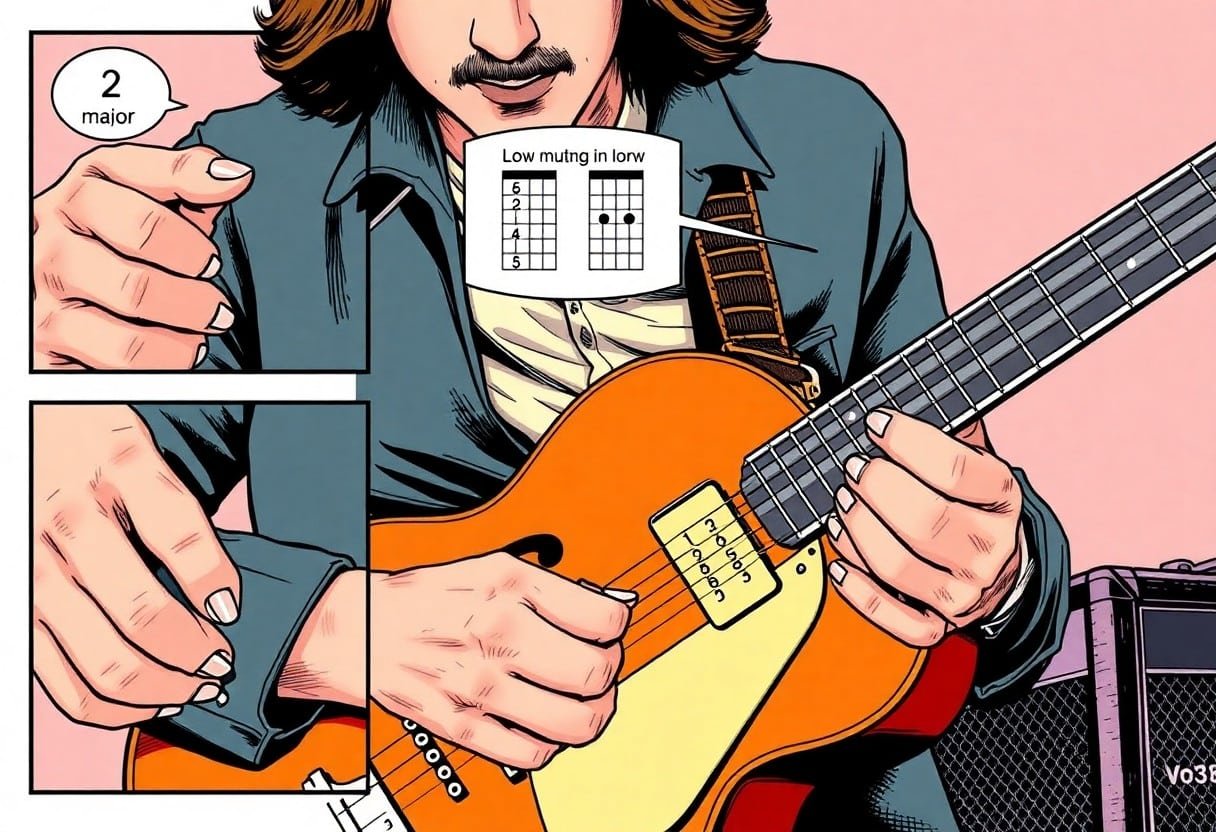
I see players overplay and overprocess, layering delay, chorus and constant runs until Harrison’s melodic intent disappears. He often relied on 2-4 note motifs, sparse fills and a clean amp (Vox AC30-style chime) rather than pedal stacking. Try using one tasteful effect at a time, aim for one or two fills every eight bars, and let single notes breathe – that restraint is why solos like “Something” land so memorably.
Ignoring Emotional Expression
When you prioritize technique over feeling, Harrison’s lessons vanish: his solos favor lyrical contour and timing. I study “While My Guitar Gently Weeps” and “Something,” where he uses 1-2 semitone bends, moderate vibrato and micro-timing to make short phrases sing. Leave space between phrases and choose notes that serve the song’s mood rather than show off dexterity.
Digging deeper, I focus on dynamics, attack and tone: play softer under vocals, increase pick attack slightly for a lead, or switch to fingerstyle for warmth. I add subtle slide on sustained notes, keep amp mids around 5-6 on a 1-10 scale for presence, and practice by singing a line then matching it on the neck – that method trains phrasing that truly conveys emotion.
Final Words
Considering all points, I encourage you to study Harrison’s phrasing, tone choices, and tasteful restraint, practising slide, melodic fills, and tasteful chord voicings until your instincts align with his sensibility; I advise focusing on tone sculpting, tasteful space, and song-serving parts rather than flashy technique, and I’ll say that disciplined listening, slow transcription, and deliberate practice will make your interpretations both authentic and personal.