
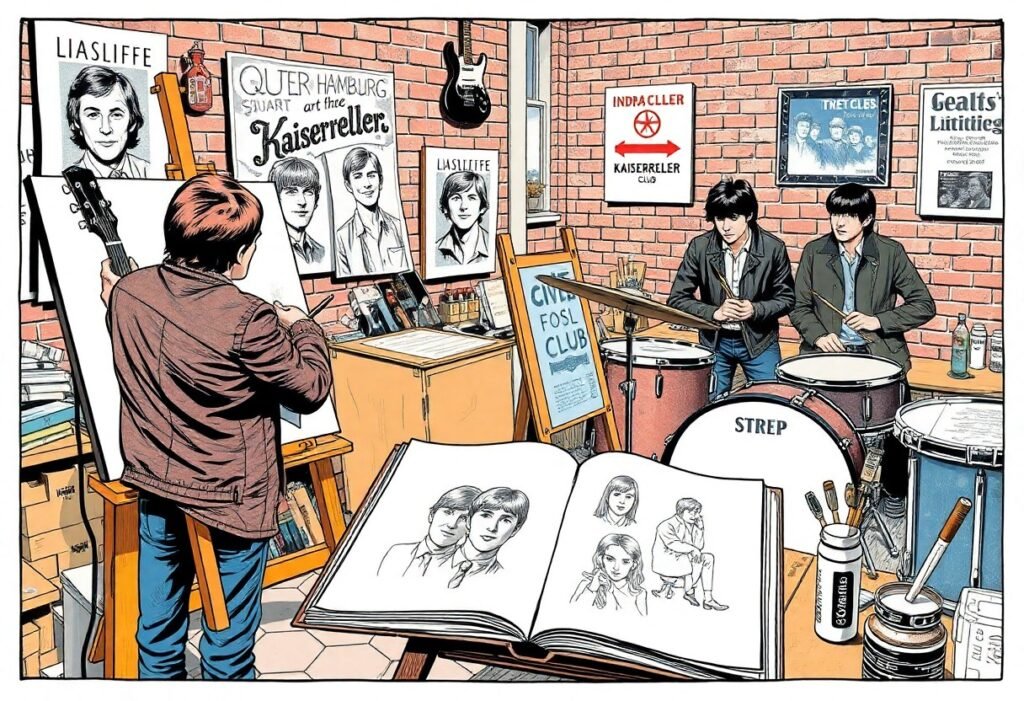

Artistry in Stuart Sutcliffe’s early paintings and stage presence created a visual language I guide you to decode; I show how to spot his brushstrokes, photographic compositions, and style choices in Beatles imagery, and I give step-by-step ways you can connect your observations to their music, cultural context, and evolving public image.
Understanding Stuart Sutcliffe’s Role
I map Sutcliffe’s role as the bridge between the Beatles’ raw Merseyside roots and a more visual, art-school identity: born June 23, 1940, he met John Lennon at Liverpool College of Art in 1957, joined the group around 1960 as bassist despite limited experience, relocated to Hamburg to pursue art, and died April 10, 1962 at 21; you can use those dates to track how his brief presence (roughly 1960-61) shifted their presentation as much as their sound.
Early Life and Artistic Development
I followed Sutcliffe from his Edinburgh birth to a Liverpool upbringing and into Liverpool College of Art (enrolled 1957), where painting and photography became central to his practice. I note he produced moody, monochrome portraits and abstractions that informed his aesthetic judgments; you can see that sensibility in his compositional choices and use of shadow. I also highlight his decision to study in Hamburg around 1960-61, which moved his priorities decisively toward visual art.
Key Contributions to The Beatles’ Aesthetics
I argue Sutcliffe’s contributions were visual as much as musical: by 1961 he’d helped shift the Beatles from skiffle youth to an art-influenced group, introducing them to Astrid Kirchherr and Hamburg’s bohemian scene, which produced those iconic black-and-white portraits and the mop-top look. I emphasize that his bass playing, while rudimentary, gave them stage presence, but his real imprint was on image-composition, wardrobe choices, and the band’s early monochrome ethos that shaped your perception of them.
I can point to concrete examples: Astrid Kirchherr’s 1961 photographs-taken after she and Sutcliffe befriended the band-show high-contrast, sculptural lighting that mirrors Sutcliffe’s canvases, and you can trace the mop-top directly from those sessions into the Beatles’ 1963 public image. I also reference surviving Sutcliffe paintings, now in private collections and occasional exhibits, which demonstrate his preference for shadow, tight composition and an economy of form that guided several of the group’s visual decisions.
How-To Appreciate Sutcliffe’s Influence
I map Sutcliffe’s visual fingerprints onto the Beatles’ early presentation and I point you to contemporary discussion at What do you think of Stuart Sutcliffe and his contribution to the Beatles’ early aesthetic? His Liverpool (1959-61) and Hamburg presence shifted stage posture, photo composition, and promo lighting, seeding gestures the band carried into recordings and press from 1960-63.
Identifying Artistic Elements within The Beatles’ Music
I trace musical signs back to art‑school habits: economy of phrase, stark dynamic shifts, and textural focus. You can hear this in the extended Hamburg sets (1960-61) where they experimented with tempo and atmospheric endings; those practices reappear in studio arrangements on Please Please Me (1963) and early Lennon-McCartney originals.
Recognizing Visual Art Influences in The Beatles’ Image
I single out Astrid Kirchherr’s 1961 portraits and Sutcliffe’s compositional eye as direct sources for the band’s moody, art‑student image you see in Hamburg photos; those visuals shaped early press kits and promoter materials well before Brian Epstein standardized the suit-and-tie look.
I add that Sutcliffe exhibited several paintings emphasizing tonal contrast and bold composition, traits mirrored in Angus McBean’s staged Please Please Me (1963) cover and later publicity shots; his death in April 1962 at age 21 intensified the group’s artistic mythology and nudged Lennon and McCartney toward more introspective writing.
Tips for Engaging with Sutcliffe’s Art
I lean on close-looking, museum databases, and provenance records to connect Sutcliffe’s canvases to the Beatles’ evolving image. I focus on works from his Liverpool College of Art period (1957-60) and his Hamburg years (1960-61), noting impasto, palette shifts, and cropped faces that mirror early publicity photos. This practice helps you track where visual habits originated and how they migrated into the band’s stage persona.
- Compare high-resolution images of paintings with Beatles publicity photos to spot recurring motifs.
- Prioritize works dated 1959-62 and request cataloguing or conservation reports when available.
- Consult Astrid Kirchherr’s photo archives and oral histories for contextual cross-references.
Visiting Galleries and Exhibitions
When I visit exhibitions, I arrive with specific questions: which canvases date 1959-62, what paints and supports were used, and which works came from Sutcliffe’s Hamburg circle. I examine labels for exhibition history, ask curators for condition reports, and photograph details (when permitted) to compare brushwork. Your close inspection of surface, scale, and framing reveals connections to stage costume and promotional photos.
Exploring Documentaries and Literature
I start with Backbeat (1994) for its dramatized chronology, then cross-check with Astrid Kirchherr’s photo essays and interviews to recover visual context; BBC and archive interviews from 1961-62 often quote dates and studio names. I also search catalogues raisonnés and academic articles for pigment analysis and exhibition histories, so you can separate myth from documented influence.
I recommend three research tiers: primary sources (Astrid’s photographs, contemporaneous Liverpool press clippings, 1960-62 studio logs), film and dramatizations for cultural sense (Backbeat), and peer-reviewed art history that uses technical analysis-XRF or pigment studies-when available. I compile timelines linking a painting’s date to Beatles tour dates to test causation rather than correlation.
Factors That Enhanced Sutcliffe’s Influence
I outline the specific forces that magnified Sutcliffe’s artistic pull on the group: intense Hamburg residencies (1960-61), his partnership with Astrid Kirchherr on visual presentation, his commitment to abstract oils and sketching, and the Beatles’ porous creative roles that allowed visual input to shape sound and stagecraft. After reviewing fan debates and archival notes – how would the Beatles career have gone had Stuart stayed … – I trace concrete changes in attire, photo composition and set staging.
- Hamburg residencies (1960-61) and high‑volume live practice
- Astrid Kirchherr’s photographic collaboration and styling
- Sutcliffe’s abstract painting language influencing color and mood
- Band’s collaborative, non‑hierarchical creative process
The Cultural Context of the 1960s
I situate Sutcliffe amid the early 1960s Merseyside-Hamburg circuit: the Beatles played hundreds of tight shows between 1960-62, interacting with continental modernism and German art students, so his modernist palette and brooding imagery resonated with emergent youth culture and café‑gallery aesthetics that reshaped the group’s visual identity.
Collaboration Dynamics with The Beatles
I emphasize role fluidity: Sutcliffe’s visual decisions, stage posture and straightforward bass playing during Hamburg residencies blurred boundaries between image‑making and musicianship, and I see the band treating presentation as collective authorship rather than a manager’s afterthought.
I can point to concrete instances: in mid‑1961 his monochrome clothing and low‑contrast lighting matched photos Astrid shot that managers later circulated; his bass often held primary root notes during 12‑bar routines while Lennon and McCartney layered riffs, freeing harmonic space; and the group’s willingness to test stage visuals nightly in Hamburg created a laboratory where a painter’s instincts could alter costume, pose and publicity strategy.
Interactive Activities for Fans
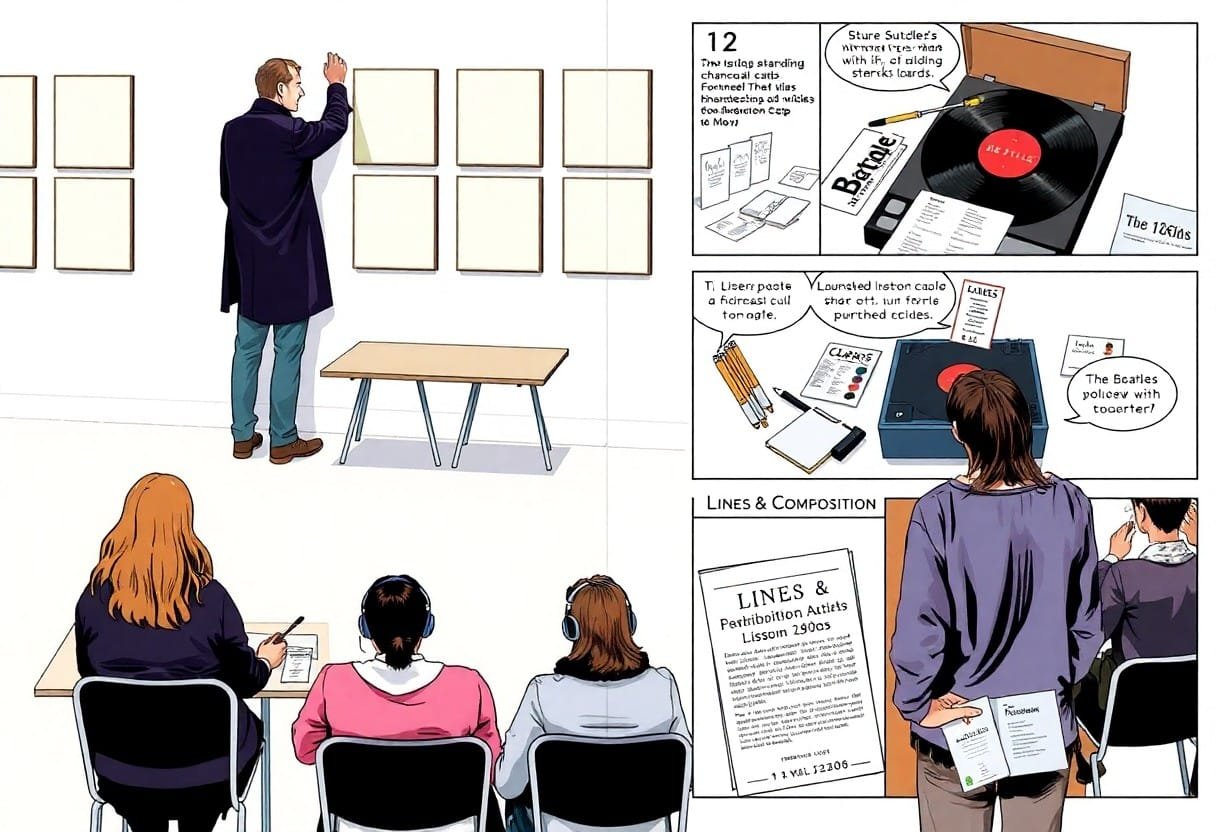
Hands-on options help you feel Sutcliffe’s impact: I run five focused activities-sketch-and-listen sessions, archival-photo comparisons, short-film nights, collaborative mural pieces, and bassline transcription workshops-that connect his painting vocabulary to the Beatles’ early aesthetic. I also recommend reading contextual pieces like Stuart Sutcliffe: Four Myths About the 5th Beatle to separate myth from fact about his 1961 move to Hamburg.
Creating Art Inspired by Sutcliffe
I ask you to set a 90-minute study: paint a monochrome portrait using oil or acrylic, limit your palette to three colors, experiment with impasto and cropped framing as in his student work at Liverpool College of Art, then compare five session pieces to identify recurring tonal choices and compositional motifs.
Discussion Groups on Beatle History
I organize monthly groups of 8-12 enthusiasts where one meeting focuses on Sutcliffe’s role, we analyze two Hamburg photos against a painting, and participants submit a 500-word reflection to ground debate in evidence rather than anecdote.
To run a session yourself, follow a 90-minute agenda: 15 minutes context (bio, 1960-61 timeline), 30 minutes close-image analysis of at least three primary sources, 20 minutes structured debate using prompts like “How did Sutcliffe’s visual choices shape the Beatles’ image?”, and 25 minutes for reflections plus a short reading list of archival interviews and exhibition notes.
Reflection and Personal Connection
I measure Sutcliffe’s imprint on the Beatles by tracing concrete touchpoints: he studied at Liverpool College of Art, joined the group in 1960, left in 1961 to focus on painting, and died in Hamburg in 1962 at age 21, yet his aesthetic choices during 1960-62-messy mop cuts, monochrome portraiture by Astrid Kirchherr, and abstract canvases-shaped how I read the band’s early image and how you can link specific photographs and press shots directly back to his sensibility.
Journaling Your Thoughts on Sutcliffe’s Impact
I sketch three focused prompts for journaling: list five visual elements in 1960-62 Beatles photos that echo Sutcliffe’s paintings; write a 5-minute freewrite on how his art altered the band’s stage presence; and compare one Sutcliffe canvas (note medium and palette) to an early publicity photo, citing dates and locations to anchor your analysis.
Sharing Insights with Fellow Fans
I prepare short, evidence-based contributions: a 5-slide presentation showing dates (1960-62), key photos by Astrid Kirchherr, brief quotes from band members, and high-resolution images of Sutcliffe’s work, then post it to a forum or hand out printed sheets at a local meet-this concrete approach helps you move discussion from opinion to documented connection.
I recommend practical formats when you expand the conversation: start threads with a clear question (e.g., “How did Sutcliffe’s 1961 Hamburg paintings influence Beatles publicity?”), include 2-3 image sources with captions and dates, tag Liverpool College of Art and the Beatles Story museum for context, and invite participants to submit one archival link or one personal reflection to keep contributions specific and verifiable.
To wrap up
Drawing together, I emphasize how Stuart Sutcliffe’s visual sensibility and early band role shaped The Beatles’ image and creative confidence; by studying his paintings, photography, and influence on stage aesthetics, you can deepen your appreciation of their artistic evolution, and I encourage you to place his contributions alongside musical analysis to see how your understanding of the group’s origins gains nuance.