

You could say Eastern melodies, instruments, and philosophies reshaped the Beatles’ sound and aesthetic; I trace how sitar timbres, raga-influenced scales, drone techniques, and Indian concepts of consciousness informed their songwriting, studio experiments, and expansion into psychedelic textures, showing how these elements interacted with Western pop to produce songs that challenged your expectations and altered popular music’s horizons.
Key Takeaways:
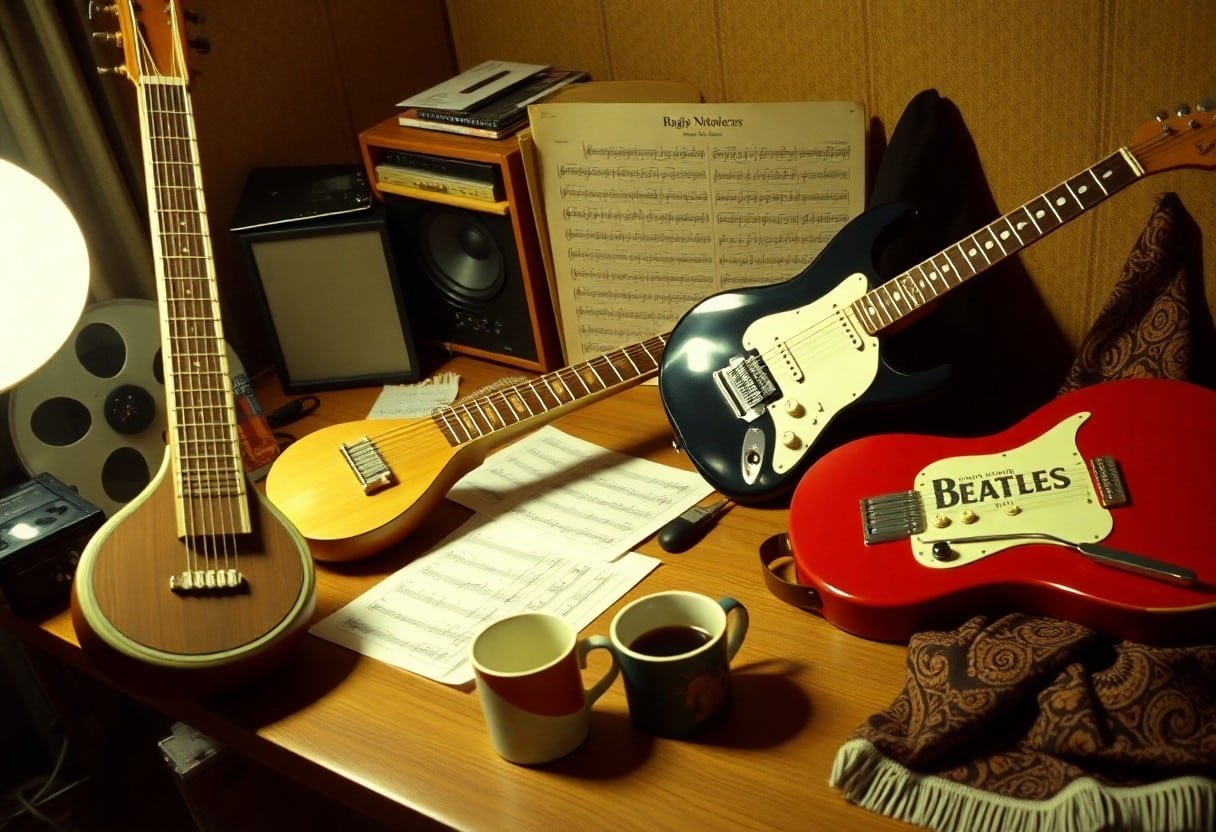
- Eastern instruments and sounds-most famously the sitar and tambura-entered Beatles recordings beginning with “Norwegian Wood” (1965) and are central to tracks like “Love You To” and “Within You Without You.”
- Indian classical concepts (drone, modal scales, raga-like improvisation) influenced melody and song form, contributing to meditative, hypnotic textures associated with their psychedelic period.
- Studio techniques (tape loops, varispeed, layering) fused with Eastern timbres so the result was a hybrid, studio-crafted psychedelic sound rather than strict classical performance.
- George Harrison’s study with Ravi Shankar and growing interest in Indian spirituality shaped lyrical themes and deepened the band’s engagement with non‑Western ideas during the mid‑1960s.
- Adoption of Eastern elements was uneven: Harrison pursued authentic study, while Lennon and McCartney used those elements selectively as part of a broader experimental palette.
- The Beatles’ use of Eastern music popularized these sounds in Western pop/rock, influencing contemporaries and helping pave the way for later world‑fusion and experimental rock.
- The influence involved selective borrowing and simplification that raises questions of cultural appropriation, yet it significantly expanded the band’s sonic vocabulary and helped define their psychedelic era.
The Influence of Eastern Instruments
Use of Sitar and Other Traditional Instruments
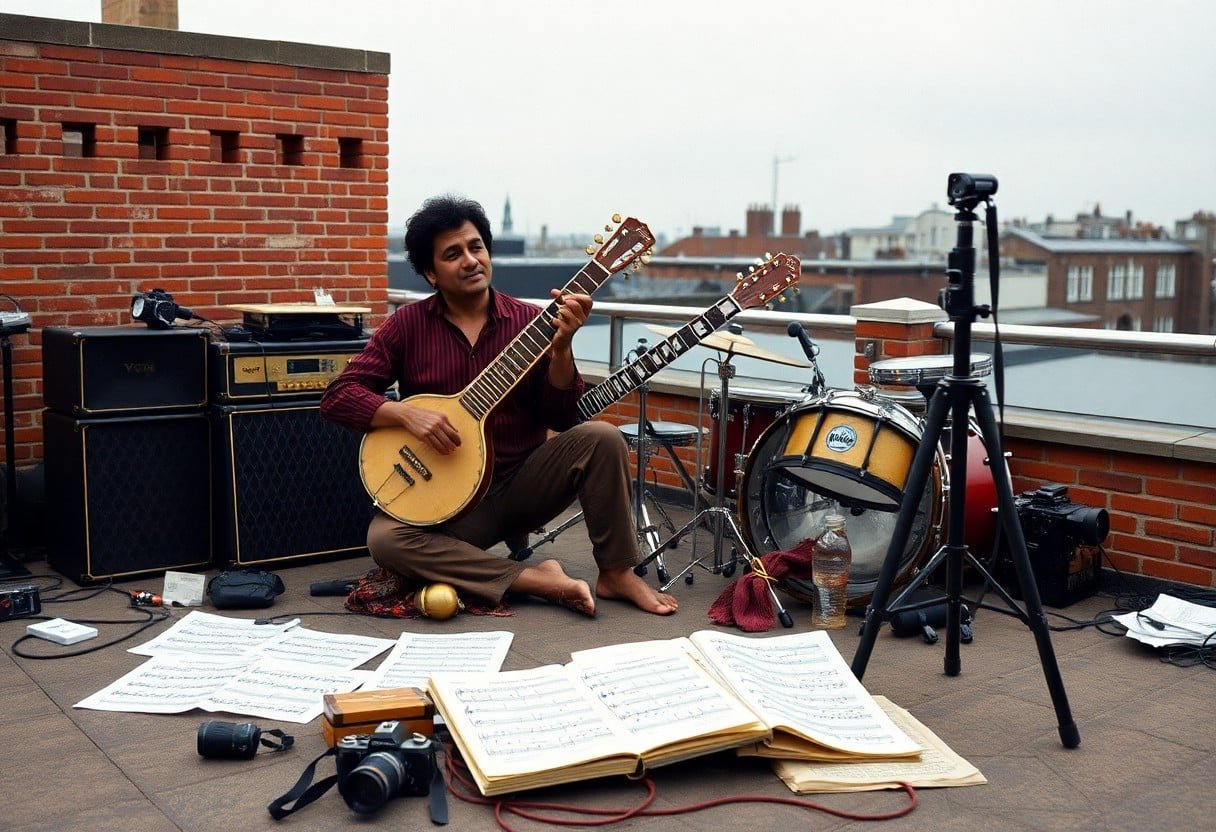
I trace the sonic shift to Harrison’s sitar on “Norwegian Wood” (1965), then to full Indian textures on “Love You To” (1966) and “Within You Without You” (1967). You can hear sitar, tambura drones, tabla, dilruba and swarmandal entering Beatles arrangements; I note Harrison’s mid‑1960s study with Ravi Shankar led him to bring Indian session players into London recordings, giving songs authentic timbres.
Impact on Songwriting and Composition
I show how those instruments altered form and melody: drones replaced standard chordal motion, raga modes informed vocal lines, and tala‑inspired rhythms fragmented pop phrasing. You’ll spot modal vamps in “Tomorrow Never Knows” (1966) and the nonlinear structures of “Within You Without You”, where Western harmonic goals yield to cyclical, meditative frameworks, expanding what a Beatles song could be.
Delving deeper, I point to concrete studio and compositional changes-Harrison’s emphasis on modal improvisation produced longer instrumental passages and call‑and‑response textures, while tambura drones and tabla attacks forced George Martin and engineers to rethink microphone placement, panning and compression; those technical decisions reshaped Beatles arrangements and nudged Lennon and McCartney toward more experimental song forms.
Philosophical and Spiritual Inspirations
I trace the Beatles’ shift to psychedelic themes not only to instruments but to ideas: their 1968 retreat to Rishikesh with Maharishi Mahesh Yogi produced roughly 48 songs and reshaped lyrics across the White Album and later works. I argue you can hear Vedantic and yogic notions in tracks like “Across the Universe” and “Within You Without You,” where contemplation, transcendence, and mantra techniques inform structure, phrasing, and mood.
Introduction to Eastern Philosophies
I’ve found that Vedanta, bhakti, and Buddhist ideas filtered directly into their writing: Harrison’s “Within You Without You” (1967) invokes atman and maya, while Lennon’s lines often echo Zen-like impermanence. You hear mantra forms-“Jai Guru Deva Om”-and conceptual shifts from external narrative to inner states as the band absorbed texts, teachers, and recordings that widened their lyrical palette.
The Role of Meditation and Spirituality
I noticed meditation changed their craft after they attended Maharishi courses in 1967-68: mantra repetition and silent focus became compositional tools, and the Rishikesh stay yielded about 48 songs. You can trace meditative influence from the drone and tape-loop collage on “Tomorrow Never Knows” (1966) to the explicit chant in “Across the Universe” (1968).
One concrete case I point to is “Dear Prudence,” written in Rishikesh about Prudence Farrow’s intense meditation, which shows how practice altered subject matter; another is Harrison’s study with Ravi Shankar, which translated ragas and tala into pop arrangements on “Within You Without You.” You should note how mantra repetition shaped vocal delivery and how sustained drones and non-Western rhythms affected studio mixing, producing the inward-facing soundscapes that define their psychedelic era.
Cultural Exchange and Collaboration
I trace how musical exchange moved from curiosity to concert halls: after Harrison met Ravi Shankar in 1966 and began formal study, the Beatles’ India visit in 1968 and Harrison’s organization of the Concert for Bangladesh on August 1, 1971, made those ties public. You can hear direct transmission-sitars, tablas and tamburas-moving from Indian gharanas into Western studios, and I judge those events as turning points that turned personal exploration into ongoing, documented collaboration between East and West.
Key Collaborations with Eastern Musicians
I note George Harrison’s long association with Ravi Shankar-Harrison studied with him from 1966 onward and later brought Shankar and Ali Akbar Khan to the Concert for Bangladesh (Madison Square Garden, Aug 1, 1971). You’ll also find John McLaughlin forming Shakti in 1975 with Zakir Hussain and L. Shankar, a clear case where Western jazz improvisation and Indian classical tala were intentionally fused on stage and on record.
Influence of Indian Music on Western Artists
I see the influence in concrete tracks and dates: the sitar motif on “Norwegian Wood” (1965), the modal, raga-based “Within You Without You” (1967), and the sitar-tinged riff on the Rolling Stones’ “Paint It Black” (1966). You’ll also notice instrument innovation-Danelectro’s Coral electric sitar appeared around 1967-showing commercial and stylistic uptake across rock and pop.
I can expand on the musical mechanics: Western artists adopted raga scales (modal improvisation), tala rhythms (cyclical metres) and the tambura drone to create sustained harmonic fields rather than standard chord progressions. For example, “Within You Without You” uses tambura and tabla to anchor a raga-like arrangement, while Shakti’s recordings (from 1975) demonstrate Western harmonic freedom applied to Indian rhythmic cycles with virtuosos like Zakir Hussain-evidence that the exchange altered compositional approaches, studio textures and performance practices across genres.
Psychedelia and Its Relation to Eastern Music
I trace how Eastern sounds refracted through psychedelia: Harrison’s sitar on “Norwegian Wood” (1965) opened mainstream ears, “Love You To” (1966) and “The Inner Light” (1968) adopt raga forms, and “Tomorrow Never Knows” (1966) uses tambura-like drones and tape loops to mimic Indian drone textures. You can consult the Cultural impact of the Beatles for wider cultural effects.
Musical Techniques and Innovations
I highlight specific techniques: modal vamps, sustained drones, sitar timbre, tabla and tambura textures, and tape-loop experimentation. On Revolver and Sgt. Pepper (1966-67) they used varispeed, reverse guitar, close-miking of percussion, and orchestral scoring to mimic raga dynamics; “Tomorrow Never Knows” alone features multiple tape loops and a single‑chord drone that became a template for psychedelic production.
The Role of Improvisation in Psychedelic Music
I note improvisation bridged Western rock and Indian classical practice: raga alap’s free rhythm encouraged texture over strict form, so Beatles studio sessions and live jams leaned into extended vamps and modal exploration. Examples include the rooftop “Get Back” jams and studio passages on “Revolution 9,” where looped elements and drones produced improvisatory, evolving soundscapes rather than fixed song structures.
I expand: Harrison’s study with Indian masters from 1966 informed tracks like “Within You Without You” (1967), which uses tabla, tambura and bowed Indian strings in a raga-like alap-to-gat flow. I observe the Beatles often simulated improvisation in the studio-tape loops, varispeed and modal drones-while other psychedelic acts (Pink Floyd’s 1967 “Interstellar Overdrive”, Grateful Dead’s 20-40 minute live jams) turned those techniques into sustained, real‑time improvisation you could experience live.

Reception and Criticism of Eastern Influences
I tracked how critics and fans split over the Beatles’ Indian turn: the sitar on “Norwegian Wood” (1965), Harrison studying with Ravi Shankar from 1966, and the 1967 tracks on Sgt. Pepper provoked debate. You can see both enthusiasm and pushback in discussions, including online threads like The Beatles’ music influenced by Eastern culture, where collectors cite chart success, session logs, and concert setlists to argue impact or excess.
Listener Responses During the 1960s
I observed that many young listeners embraced Indian sounds after “Norwegian Wood” and the 1967 releases; Sgt. Pepper topped UK and US charts, exposing “Within You Without You” to millions. College radio, counterculture gatherings, and psychedelic clubs replayed sitar motifs, while some mainstream AM stations reduced airplay. You likely saw friends split between fascination and confusion; fan letters archived in collections show polarized reactions across age groups.
Critiques from Musical Purists
I noticed purists argued the Beatles flattened Hindustani music into modal backdrops, citing loss of alap, improvisation, and tala structure. Critics pointed to simplified sitar lines on “Love You To” and studio looping on “Tomorrow Never Knows” as reductions rather than authentic exchanges. You can find interviews from late-1960s ethnomusicologists and Indian musicians voicing concern about technical compromises and cultural misreading.
I dug into primary sources and found Ravi Shankar praised Harrison’s sincerity yet cautioned that pop contexts often obscured raga fundamentals; ethnomusicologists documented how 12‑tone western tuning, studio overdubs, and fixed backbeats compressed microtonal ornamentation and cyclical tala into repetitive riffs. You can trace cases: “Love You To” uses tabla patterns adapted for a 4/4 pop frame, and that adaptation is what many purists singled out as aesthetic dilution rather than faithful integration.
Legacy of Eastern Influences on The Beatles
I still point to how George Harrison’s sitar on “Norwegian Wood” (1965) and the full raga arrangement of “Within You Without You” (1967) changed pop expectations; you can trace that through Harrison studying with Ravi Shankar from 1966 and organizing the Concert for Bangladesh in 1971. That shift even inspires alternate perspectives-see WI: The Beatles never went Psychedelic?-which challenges what would have happened without those cross-cultural experiments.
Lasting Impact on the Music Industry
I note that producers and bands rapidly adopted sitars, tamburas and modal phrasing after 1965: examples include “Paint It Black” (1966) and countless sessions adding drone textures. You saw studio techniques evolve-Indian instruments were mic’d differently, arrangements allowed extended improvisation, and labels marketed “exotic” records; by 1968 festival lineups and radio playlists routinely featured Eastern-inflected rock alongside mainstream acts.
Influence on Future Generations of Musicians
I argue that Beatles-Eastern fusion opened pathways for jazz, folk and rock musicians to study Indian classical forms; artists from John McLaughlin to Donovan cited that lineage, and you can hear raga-inspired phrasing in later work from progressive rock to worldbeat. Their example normalized sitars and tala rhythms in studio vocabulary and academic curricula, so many younger players sought training rather than mere imitation.
I can point to concrete outcomes: 1970s collaborations between Western jazz players and Indian maestros produced groups like Shakti and recordings that influenced fusion albums; by the 1980s and 1990s labels and conservatories offered cross-cultural programs, and artists such as Paul Simon and Peter Gabriel credited earlier Beatles-era openness when producing globally sourced records.
To wrap up
So I conclude that Eastern music helped shape the Beatles’ psychedelic era by introducing modal scales, drones, and new timbres that broadened your perception of song form and studio possibilities; I see its influence in their melodies, instrumentation, and philosophical framing, even as they fused those ideas with Western pop to create a distinctive, experimental sound.
FAQ
Q: How did Eastern instruments and musical techniques influence the Beatles’ psychedelic sound?
A: The Beatles incorporated Eastern instruments (notably sitar, tambura and dilruba) and modal approaches that introduced drone textures, non-Western ornamentation and raga-like phrasing into their arrangements. George Harrison’s sitar on “Norwegian Wood” and his study with Ravi Shankar brought authentic timbres and playing techniques; tracks such as “Within You Without You” use Indian scales, tala-inspired rhythms and sustained drones to create meditative, otherworldly atmospheres. In the studio these elements were combined with tape loops, reverb and backward recording to transform those sounds into psychedelic timbres rather than straightforward Indian classical performances.
Q: Were the Beatles’ lyrical themes and image influenced by Eastern philosophy as much as by its music?
A: Yes. Interest in Hinduism, Transcendental Meditation and Sanskrit concepts fed their lyrics, album art and public persona during the mid-1960s, producing introspective and mystical themes that matched the new sonic palette. Harrison’s spiritual pursuits shaped songs about consciousness and inner journeys, while other members mixed those ideas with contemporary pop concerns; this blend helped make the music feel exploratory and psychedelic rather than simply exotic ornamentation.
Q: Did Eastern music alone create the Beatles’ psychedelic era, or was it one of several influences?
A: Eastern music was an important ingredient but not the sole cause. Studio innovation (George Martin and advanced production techniques), Western avant-garde ideas, American and British psychedelia, folk and classical influences, and the use of drugs and new listening cultures all combined to produce the psychedelic era. Eastern elements provided distinctive sounds and spiritual language that, when fused with experimental production and diverse musical sources, helped define the Beatles’ unique psychedelic aesthetic.