

Most people overlook how social, technological, artistic and political changes converged to elevate The Beatles into a global, enduring phenomenon; I analyze how postwar youth identity, mass media expansion, studio innovation and shifting cultural values shaped your tastes and soundtracks, and I demonstrate how their songwriting, image strategy and cultural timing transformed fleeting trends into lasting influence.
Key Takeaways:
- Post-war youth culture and rising disposable income created a powerful teen market eager for new music and identity.
- Mass media and a booming record industry-radio, television appearances, and global distribution-amplified their reach rapidly.
- The British Invasion framed them as a fresh cultural export, making their sound and style internationally exotic and influential.
- Innovative songwriting and genre-blending transformed pop into serious art, with albums and lyrical depth that invited repeated listening.
- Alignment with broader social shifts-early counterculture, changing sexual norms, and civil-rights consciousness-made their work resonate beyond entertainment.
- Advances in studio technology and production techniques allowed unprecedented sonic experimentation and artistic control.
- Distinctive image, charismatic personalities, and intense fandom turned cultural moments into enduring mythology and commercial ecosystems.
The Sociocultural Landscape of the 1960s
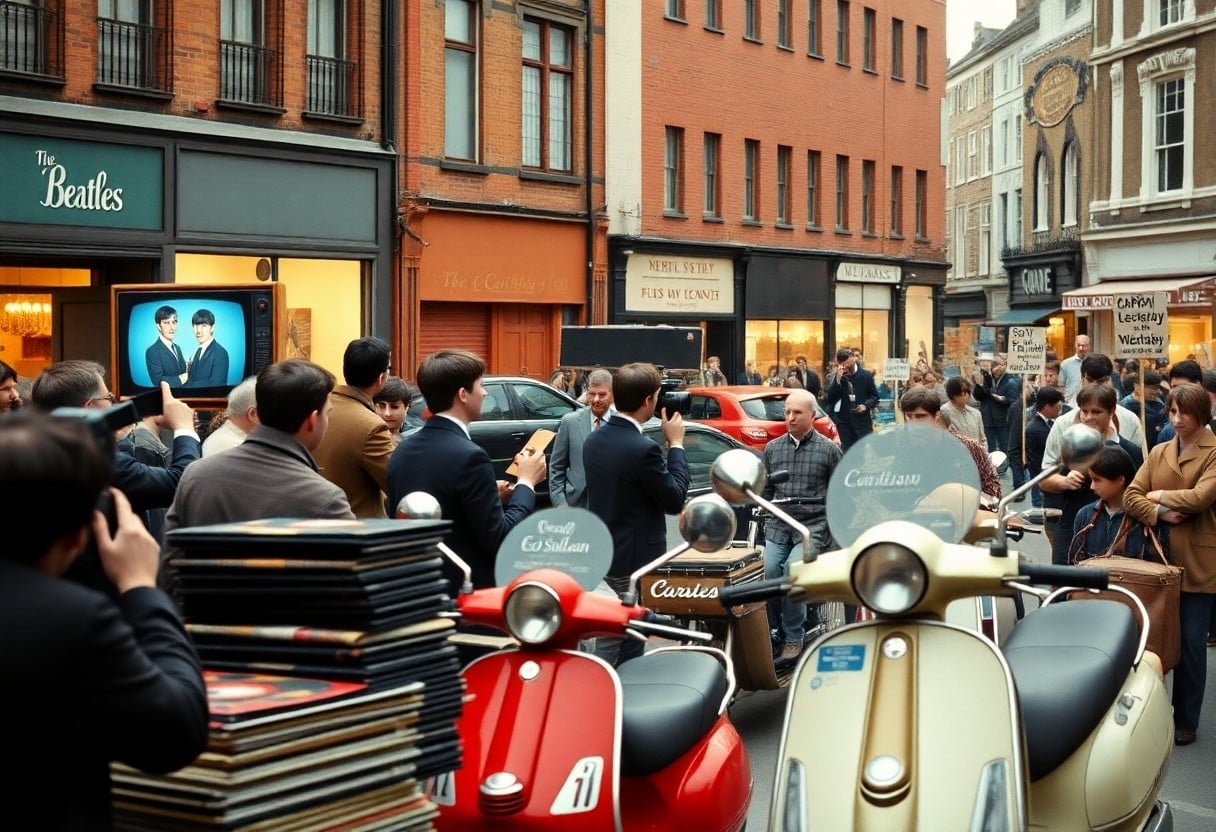
I trace how demographic change, rising prosperity, and mass media converged to reshape taste: the baby boom cohort (born 1946-64) swelled markets, television and the transistor radio spread pop instantly, and youth disposable income expanded leisure spending. You saw political movements-civil rights, anti‑war protests-and cultural moments like the 1964 Ed Sullivan appearance (about 73 million U.S. viewers) that turned local bands into global phenomena overnight, accelerating the Beatles’ reach.
Post-War Generation Dynamics
I focus on the post‑war generation’s scale and institutions: millions of young people came of age amid expanding education (the 1963 Robbins Report in Britain boosted university places), greater social mobility, and improving standards of living. You encountered larger peer networks in towns and cities, which amplified trends rapidly; families tolerated new styles and sounds as markers of identity rather than rebellion alone, giving bands like the Beatles a broad, receptive audience.
Rise of Youth Culture and Counterculture
I note how youth culture professionalized into an industry: record singles, teen magazines, touring circuits, and portable radios created mass fandom. You can point to Beatlemania, packed stadiums, and record‑breaking sales as symptoms, while subcultures-mods, rockers, later hippies-supplied distinct styles. Media coverage and consumer targeting turned youth tastes into profitable markets, and that commercial scale made cultural pushes harder to ignore.
I expand by emphasizing cultural flashpoints: the 1967 “Summer of Love” in San Francisco, the Beatles’ studio leap with Sgt. Pepper (1967), and Woodstock in 1969 (roughly 400,000 attendees) crystallized a countercultural language of psychedelia, communal living, and political protest. You saw music, fashion, and activism cross‑pollinate-bands influenced policy conversations and vice versa-so I argue the music both reflected and propelled rapid social transformation.
Musical Innovation and Influences
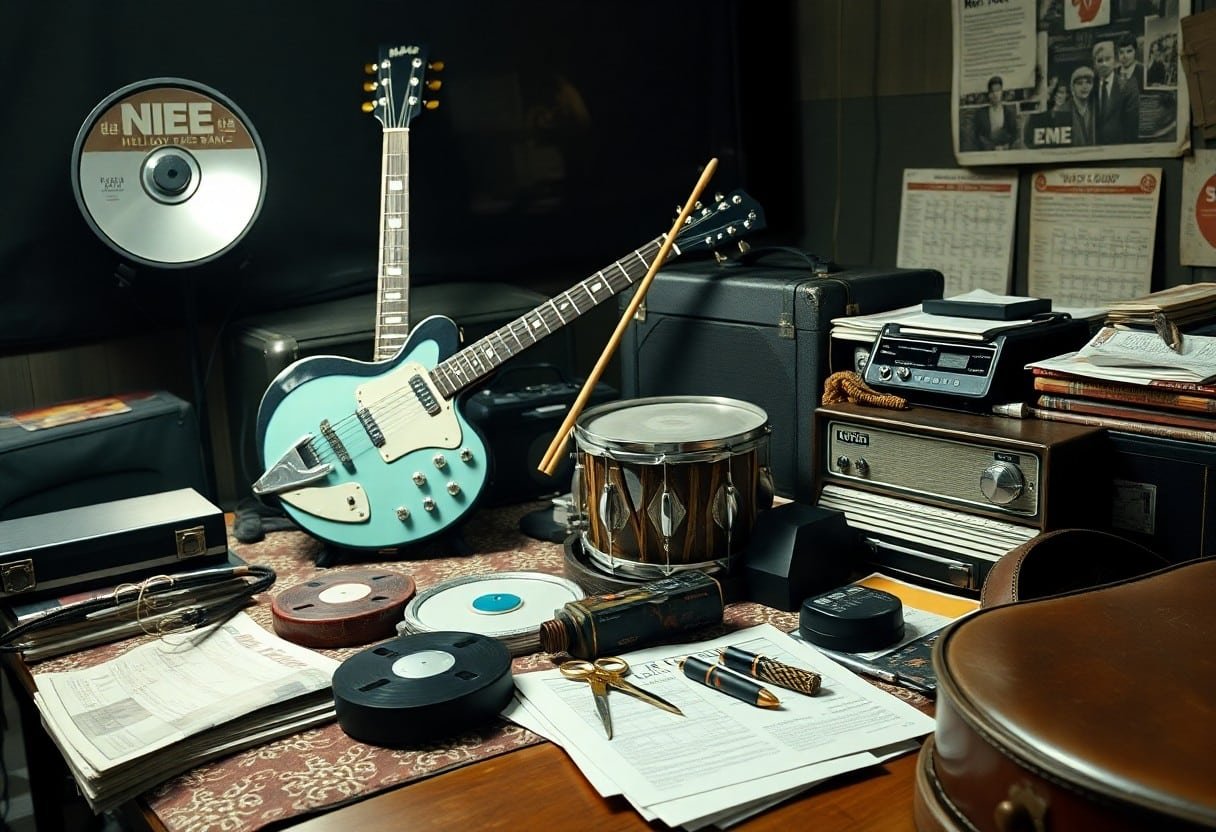
I map their shifts by records and sessions: early rock and skiffle roots sharpened on 250+ Hamburg nights (1960-62), then studio breakthroughs across Revolver (1966) and Sgt. Pepper (1967) introduced tape loops, reverse guitars, and orchestral scoring. You can pinpoint George Martin’s arranging, George Harrison’s Indian studies, and Ken Townsend’s ADT as technical inflection points that turned songs into experiments that reshaped pop between 1964 and 1967.
Rock and Roll Roots
I trace their core sound to Elvis, Chuck Berry and Little Richard and to skiffle’s DIY ethic; you can hear Berry’s phrasing in “Roll Over Beethoven” and Little Richard’s shout in “Long Tall Sally.” They rehearsed that vocabulary through hundreds of live dates, adopting tight harmonies and three‑minute songcraft from Buddy Holly, which made their early singles radio‑ready and fiercely immediate.
Incorporation of Diverse Genres
I point to concrete moments: “Norwegian Wood” (1965) brought sitar into pop, “Tomorrow Never Knows” (1966) layered tape loops and tambura drones, and “Eleanor Rigby” used a string octet instead of a rock band. You can follow genre threads-Indian music, classical chamber strings, R&B and Motown covers-across albums that expanded what a pop group could include.
I also examine studio technique as genre expansion: you’ll hear 4‑track reduction mixes, Varispeed, and the first ADT doubles on Revolver (1966), plus a 40‑piece orchestra on “A Day in the Life” (1967). I argue these choices let them translate non‑Western scales, classical timbres and psychedelic textures into mainstream hits, making experimentation commercially viable and influential for subsequent artists.
Media and Communication Advances
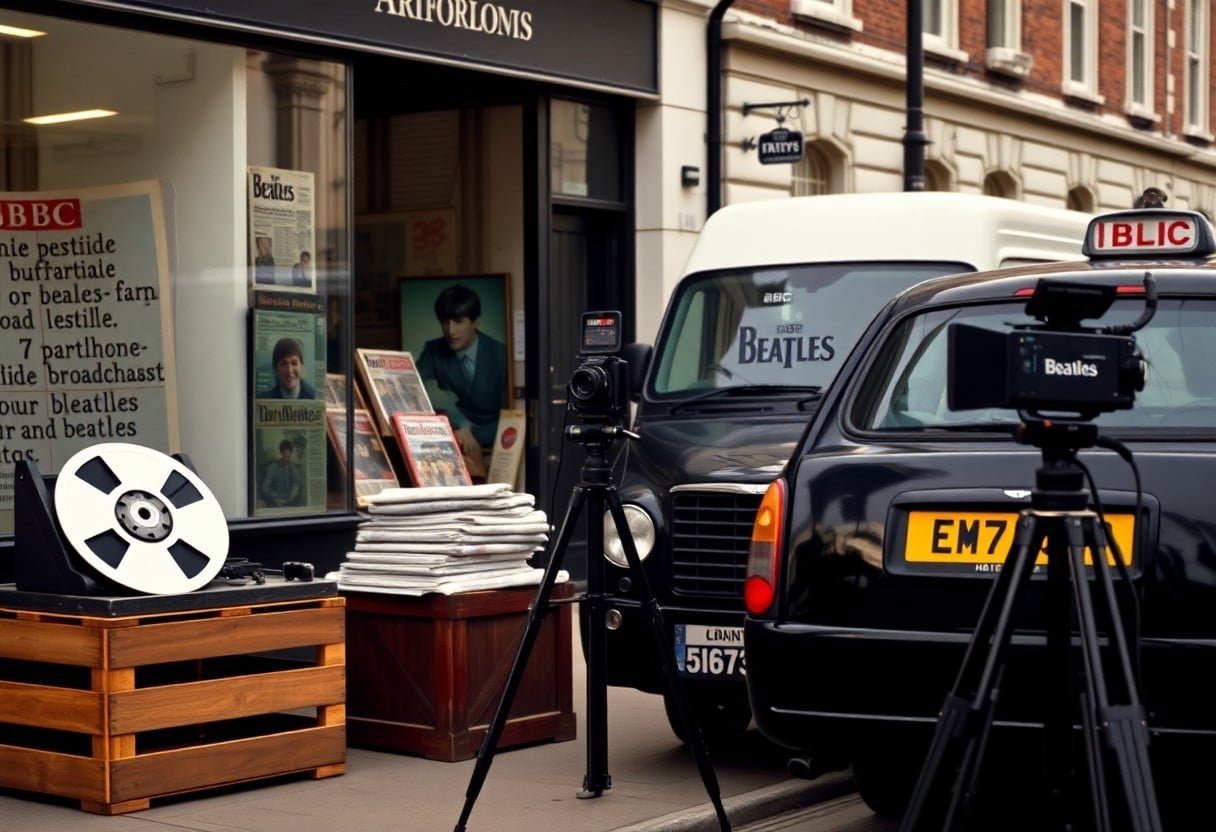
I argue that faster mass communication turned the Beatles into a global phenomenon almost overnight: their Feb 9, 1964 Ed Sullivan Show reached about 73 million viewers and accelerated record sales, while analyses like The Beatles Pop Music And Youth Culture Analysis trace how television, radio, press and emerging fan networks multiplied fandom across continents in months rather than years.
The Role of Television
I point to television as a force multiplier: their 1963 Royal Variety performance and Ready Steady Go! TV appearances set British audiences alight, then the 1964 Ed Sullivan broadcast brought the band into American living rooms, delivering chart-topping singles to millions and proving visual charisma – synchronized moves, matching suits – sold records as effectively as sound.
Impact of Radio and Print Media
I note radio and print amplified reach: despite BBC restrictions, offshore stations like Radio Caroline (launched 1964) targeted youth with continuous pop playlists, while Melody Maker, NME and fan magazines turned every interview and photo into headline fuel; on April 4, 1964, the Beatles famously held the top five Billboard singles, a clear media-driven feedback loop.
I can trace practical examples: Brian Epstein’s media strategy booked constant press coverage and coordinated single releases, radio playlists converted that coverage into airplay, and fanzines multiplied grassroots enthusiasm; together these channels created demand spikes that translated directly into skyrocketing record sales and sold-out tours across the UK, US and Europe.
Globalization and Cultural Exchange
British Invasion and Its Effects
I point to the Feb 9, 1964 Ed Sullivan appearance, watched by an estimated 73 million Americans, as the ignition: within weeks British acts like the Rolling Stones, the Kinks and Herman’s Hermits dominated US charts, and labels such as Capitol and EMI ramped up transatlantic promotion. You can see the shift in 1964 Billboard data, where dozens of UK singles entered the Hot 100, reshaping radio playlists, fashion, and youth identity.
The Beatles’ Influence Worldwide
I note that the Beatles amassed 20 US No.1 singles and staged landmark events like Shea Stadium (55,600 attendees in 1965), which helped create stadium rock. You hear their cross-cultural reach in 1965’s “Norwegian Wood,” which introduced sitar textures to pop, and in the 1967 Our World broadcast of “All You Need Is Love,” seen by roughly 400 million viewers, cementing a global cultural moment.
I also emphasize their industry and artistic legacy: estimated 600 million records sold worldwide, studio innovations on Revolver and Sgt. Pepper that pushed multitrack production, and George Harrison’s work with Ravi Shankar that opened Western ears to Indian music. You can trace modern worldbeat, fusion, and local cover scenes-from Tokyo clubs to São Paulo festivals-directly to how the Beatles circulated and were adapted across cultures.
Iconic Branding and Public Persona
I point to Brian Epstein’s tight control over image-matching mop-top haircuts and collarless suits-to explain how The Beatles became a brand; Apple Records (1968) and Peter Blake’s Sgt. Pepper cover turned albums into visual trademarks, and licensed merchandise and films turned songs into lifestyle statements. I urge you to Explore Beatlemania: The Timeless Legacy of The Beatles for a vivid look at how those visual and commercial choices locked their cultural identity.
Image and Style Evolution
I track their stylistic arc from Dougie Millings’ early collarless suits and mop-tops to the Shea Stadium spectacle (55,600 fans, 1965) and the ornate Sgt. Pepper uniforms (1967). I show how they adopted Indian dress after studying with Ravi Shankar, embraced psychedelic patterns and facial hair by 1967-68, and used visual reinvention to signal musical shifts, making your perception of them inseparable from their evolving look.
Relationship with Fans and Media
I analyze their media choreography: Ed Sullivan’s Feb 1964 broadcast drew about 73 million U.S. viewers, A Hard Day’s Night humanized them on film, and press conferences amplified every quip. I argue you felt part of a shared moment because their interviews, films and staged appearances made access feel personal-even amid mass hysteria.
I add that the 1966 decision to stop touring after Candlestick Park (Aug 29, 1966) and controversies like Lennon’s “more popular than Jesus” remark shifted their relationship with audiences. I watched how the band moved from live spectacle to studio innovation, using albums, targeted press, and Apple Corps to shape narratives, which turned fan engagement from stadium frenzy into intense listening and cultural interpretation.
Enduring Legacy and Influence
I still measure their reach by how often I find their songs in cultural touchpoints: One of the most iconic bands of all time, The Beatles … – their catalog has sold an estimated 600 million records worldwide, and albums like Sgt. Pepper (1967) and Abbey Road (1969) rewrote studio practice and pop songwriting.
Impact on Future Artists and Genres
I trace direct lines to artists and genres: Oasis and Blur named them as touchstones, Pink Floyd and Radiohead absorbed their studio boldness, and you can hear George Martin’s strings on “Eleanor Rigby” and Sgt. Pepper’s multitrack experiments feeding into psychedelia, progressive rock and modern pop production techniques.
Continued Relevance in Contemporary Culture
I still see their presence in contemporary culture: film musicals like Across the Universe (2007) built narratives around Beatles songs, annual events such as Beatles Week in Liverpool draw fans and scholars, and you regularly encounter their tracks on playlists, commercials and movie soundtracks that introduce them to new generations.
I can point to concrete moments that keep them visible: “Twist and Shout” revived interest after Ferris Bueller’s Day Off (1986), Paul McCartney and Ringo Starr include Beatles songs in global tours, and curated reissues, box sets and documentary projects continually surface remastered tracks and unreleased takes for both researchers and casual listeners.
To wrap up
Conclusively I argue that postwar youth empowerment, expanded mass media, and rapid studio and recording innovations combined with social liberalization and cross-cultural curiosity to propel The Beatles into a timeless phenomenon; their songwriting evolution and keen engagement with your emerging identity made their music both immediate and enduring.
FAQ
Q: What social and economic shifts in the 1950s-60s set the stage for the Beatles’ rise?
A: Postwar prosperity created a powerful youth market with disposable income and distinct tastes, so young people could buy records, clothes, and concert tickets. Widening access to education and mass urban migration fostered a youth identity separate from older generations, which the Beatles’ rebellious charm and accessible image tapped into. The spread of American rock’n’roll and skiffle in Britain gave them musical roots to build on, while growing skepticism of traditional authority made their playful challenge to convention feel timely and energizing.
Q: How did media and technology amplify the Beatles’ cultural impact?
A: Television appearances, most famously on Ed Sullivan, delivered them to millions simultaneously and made their look and mannerisms part of everyday conversation. Radio, chart-driven pop markets, and expanding press coverage created continuous exposure, while improvements in recording technology and the LP format allowed the Beatles to experiment sonically and present albums as cohesive artistic statements. Global distribution networks and emerging fan culture turned local popularity into an international phenomenon almost overnight.
Q: In what ways did the Beatles’ artistic evolution interact with broader cultural trends to make their influence lasting?
A: Their progression from catchy early singles to sophisticated albums mirrored the era’s move from entertainment to artistic seriousness in pop music, legitimizing rock as a medium for complex ideas and production techniques. Incorporating diverse musical influences-Indian instruments, studio effects, baroque arrangements-aligned them with widening interest in cross-cultural exchange and psychedelia. Their prolific songwriting, willingness to experiment in the studio with George Martin, and public repositioning from pop idols to cultural leaders created a template many later artists and movements adapted, securing their long-term relevance.