


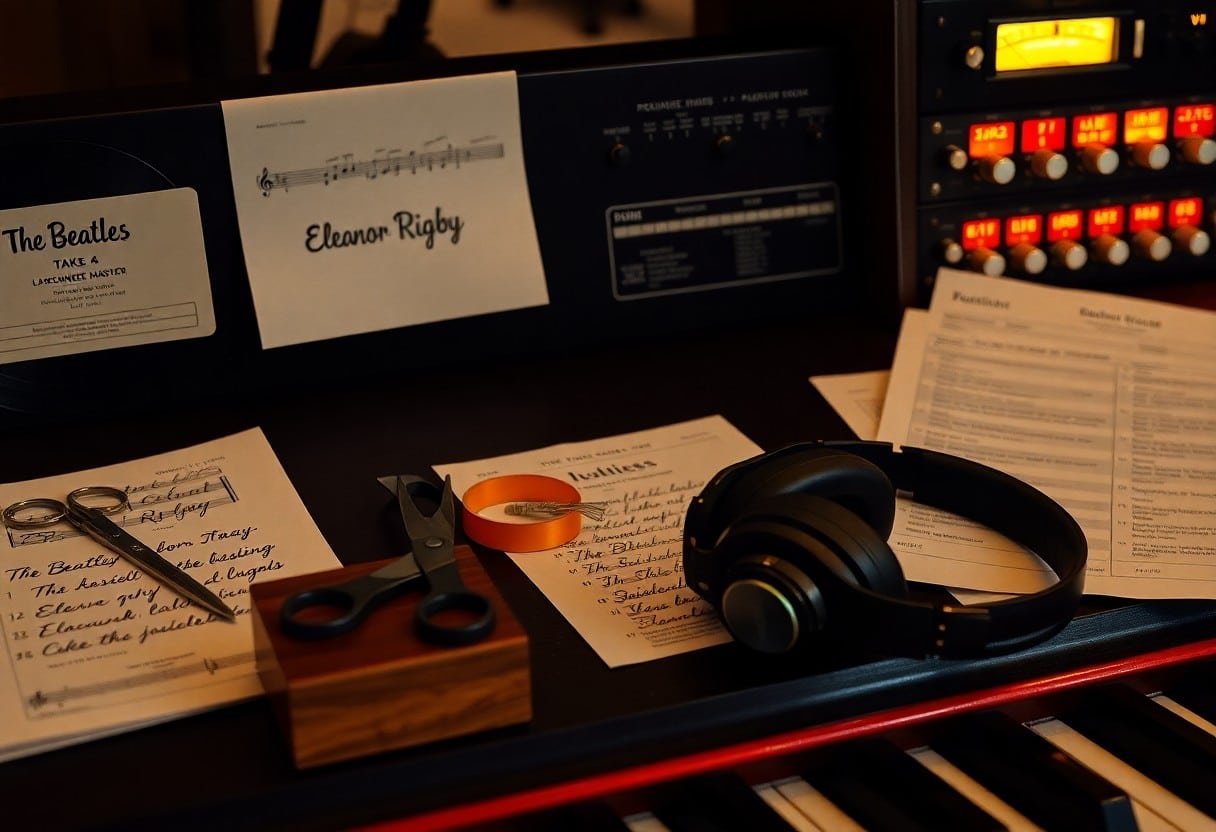
You can hear George Martin’s fingerprints across the Beatles’ recordings, and I assess how his arranging, studio innovations, and musical guidance amplified their songwriting and performance. I analyze sessions, instrumentation choices, and recording techniques to show where his influence elevated Beatles tracks beyond raw talent, helping you distinguish Martin’s role from the band’s own creative evolution and your sense of authorship.
Key Takeaways:
- Amplified the Beatles’ songwriting by translating rough ideas into polished studio arrangements.
- Introduced orchestration and classical techniques that broadened pop music’s sonic palette.
- Pioneered technical studio methods (ADT, multitrack layering, tape manipulation) to realize novel sounds.
- Functioned as a trusted collaborator and musical editor, improving performances without overshadowing the band.
- The Beatles’ songwriting, performance energy, and cultural impact remained the primary drivers of their fame.
- His flexibility and openness to experimentation enabled landmark albums like Revolver and Sgt. Pepper.
- Their legendary status resulted from a partnership: Martin’s production plus songwriting, timing, and cultural context.
The Early Beatles: A Foundation in Production
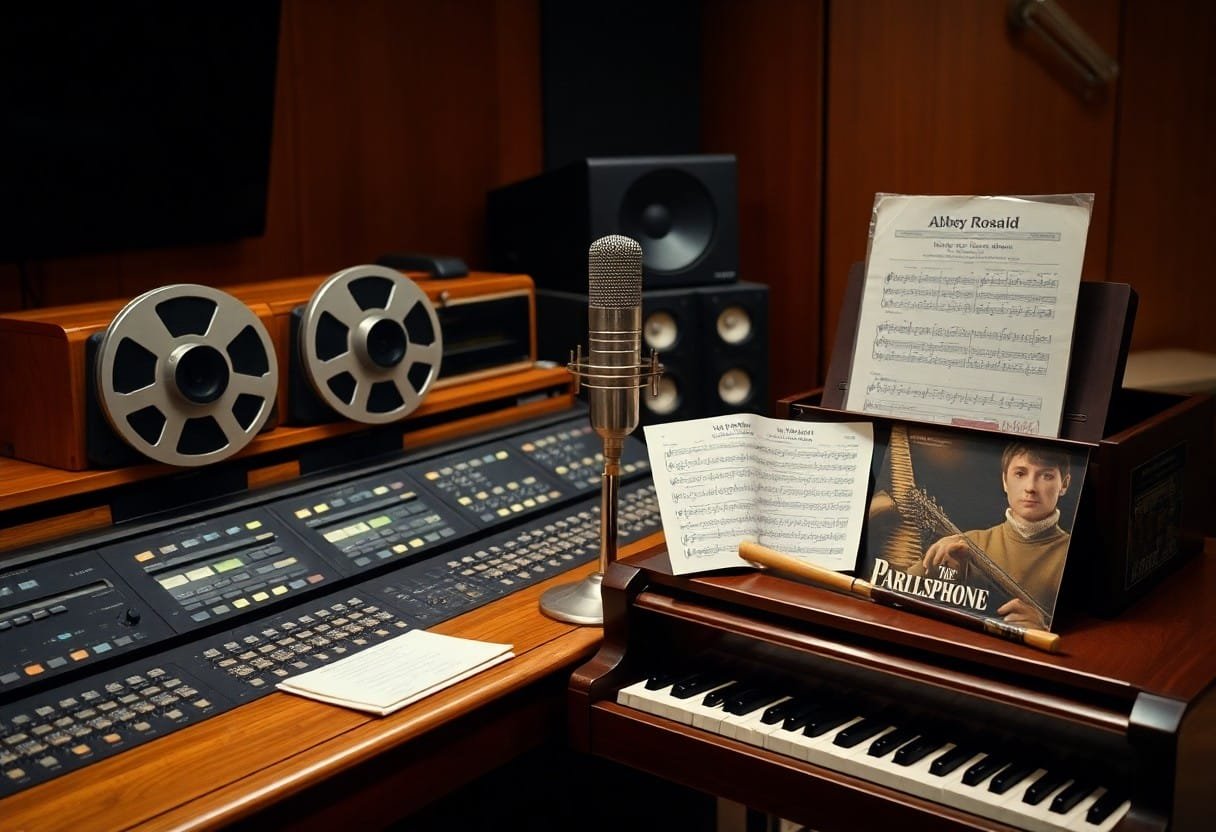
I highlight how Martin turned raw Merseyside energy into disciplined studio records by demanding tight arrangements, live ensemble takes and clear vocal balance; on 11 February 1963 he helped capture 14 tracks in a single marathon session at Abbey Road Studio Two, proving that the band’s performance intensity could survive the microphone. You can trace the later studio experimentation straight back to those early sessions, where discipline, tempo choices and mic placement became repeatable production tools.
The Importance of “Please Please Me”
I focus on “Please Please Me” because Martin’s production choices – speeding the tempo, adding subtle echo and foregrounding Lennon’s vocal – turned a club favorite into a radio-ready single of roughly two minutes that topped several UK charts in early 1963. You can hear how the bright piano, punchy snare and tight harmonies were arranged for maximum bite, setting a template for the Beatles’ pop immediacy and commercial breakthrough.
Innovations in Sound and Arrangement
I point to concrete techniques Martin introduced: strategic double-tracking of lead vocals, close-miking the piano and guitar, and encouraging compact song forms with decisive bridges. On early tracks he treated the studio as an instrument, shaping dynamics so bass and snare hit forward and three-part harmonies sat crisp in the mix, which helped the Beatles’ records translate from live clubs to radio playlists.
Digging deeper, I note Martin’s classical training and ear for arrangement guided small but decisive moves – asking for a tighter harmony on the third verse, isolating Ringo’s syncopated fills, or trimming an intro to keep singles under three minutes. You’ll find these choices on specific tracks: the up-front piano on “I Saw Her Standing There,” vocal doubles on “Please Please Me,” and mix decisions by engineer Norman Smith that gave early Beatles singles their immediate, punchy sound.
Experimentation and Evolution: The Middle Years
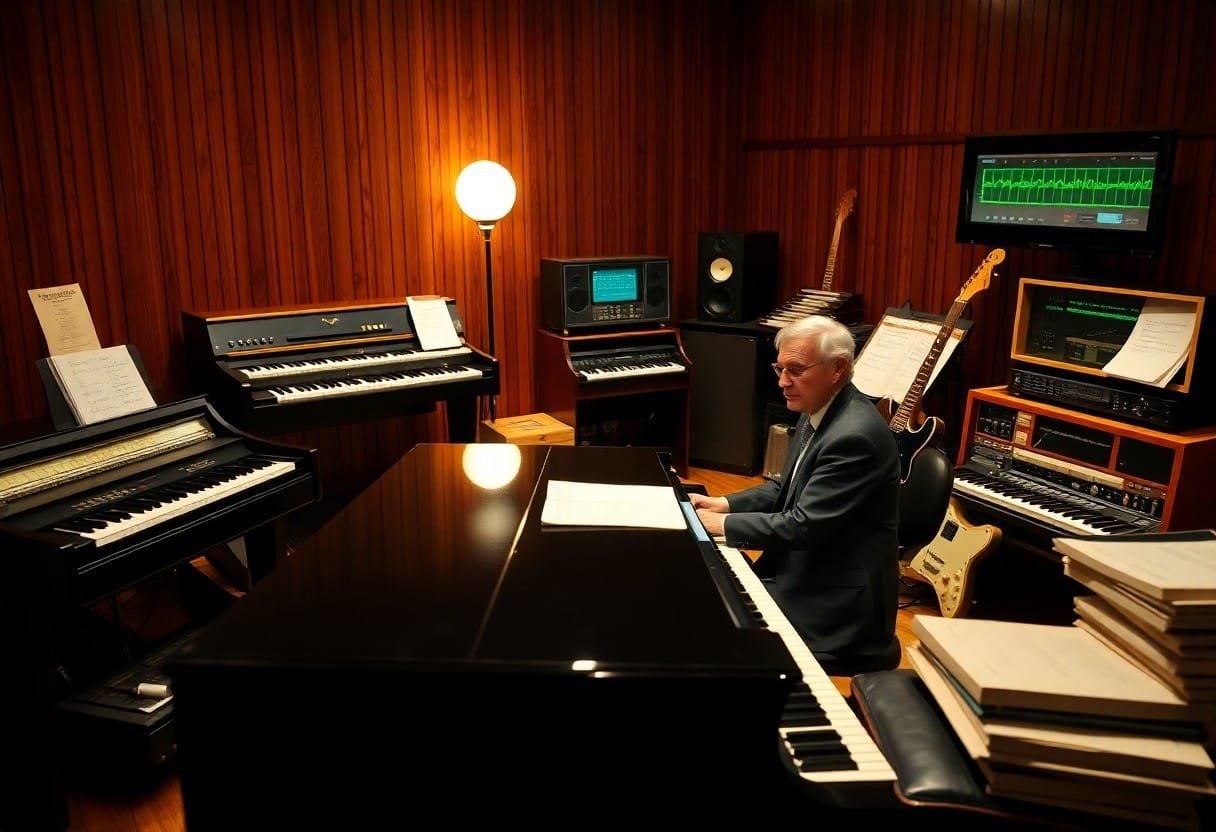
I track the Beatles’ pivot from live pop to studio explorers between Rubber Soul (Dec 3, 1965) and Revolver (Aug 5, 1966); you can hear songwriting deepen and production become an instrument itself. I noticed George Martin move from conventional producer to arranger and technical catalyst, endorsing sitar textures, sped-up piano on “In My Life,” and the risky studio manipulations that turned the band’s mid-60s output into a laboratory for your listening expectations.
“Rubber Soul” and the Shift in Songwriting
I see Rubber Soul as the turning point where Lennon-McCartney wrote with introspection and folk-rock sensibilities; you’ll hear it in “Norwegian Wood” with Harrison’s sitar and in “In My Life,” where Martin recorded a piano solo at half-speed to mimic a baroque timbre. I felt the album’s 1965 release pushed their lyrics toward narrative detail and unconventional instrumentation, prompting bolder studio choices on subsequent sessions.
The Groundbreaking Techniques of “Revolver”
I consider Revolver the moment studio technique overtook stage replication: you hear tape loops and varispeed on “Tomorrow Never Knows,” a string octet on “Eleanor Rigby” arranged by Martin, and the first practical use of ADT developed at Abbey Road in 1966. I point to engineers like Geoff Emerick working with Martin to close-mic drums and experiment with signal path, giving your ears textures unheard on prior pop records.
I can be specific: “Tomorrow Never Knows” was built from multiple tape loops fed into the mixing desk, John’s vocal run through a Leslie cabinet and treated with early ADT, while “Eleanor Rigby” replaces guitars and drums with four violins, two violas and two cellos arranged by Martin. I note Emerick’s unconventional mic placement and varispeed techniques across sessions, and you can trace how those innovations directly shaped the album’s otherworldly sound.
The Masterpiece Era: “Sgt. Pepper’s” and Beyond
From Sgt. Pepper (released 1 June 1967) onward I see Martin shifting from composer-producer to studio architect: sessions ran Nov 1966-Apr 1967 at Abbey Road, Geoff Emerick engineering, and Martin turning sketches into precise productions. You can hear his hand in the album’s tight sequencing, orchestral climaxes and unconventional textures that opened the door to the Beatles’ late-60s experiments and the more ambitious work that followed.
Concept Albums and Artistic Ambitions
Rather than a single story, I treat Sgt. Pepper as a curated mood-piece: Martin helped shape sequencing and reprise choices-note the short title-reprise-and smoothed transitions so the record reads as an event. You’ll also see that approach later on Abbey Road, where Martin assisted in assembling the long medley on side two, turning fragments into a coherent listening journey.
The Role of Orchestration and Studio Effects
On “A Day in the Life” Martin scored and conducted a 40-piece orchestra to produce the famous orchestral glissandi, while tape loops, varispeed and ADT became routine tools for textural work; I still point to those techniques when I explain how production became a compositional element you can hear as much as melodies or lyrics.
To dig deeper: the “Strawberry Fields Forever” sessions (Jan-Feb 1967) encapsulate Martin’s method-he and Emerick edited together two radically different takes by altering tape speed and pitch to match keys, creating a hybrid that would have been impossible live. I also note that Martin deployed close-miking, creative use of compression and multi-track bounces to overcome four-track limits, and chose when to add orchestral charts or leave things stark; for example, Mike Leander arranged the strings for “She’s Leaving Home” when Martin was temporarily unavailable, showing how production decisions were collaborative yet always guided by an ear for balance between innovation and songcraft.
Legacy of George Martin’s Influence
I still point to how Martin-who produced nearly all Beatles recordings from 1962-1970-merged studio innovation with arrangement, from the string octet on “Eleanor Rigby” (1966) to the orchestral climax on “A Day in the Life”; you can read a concise obituary that highlights this arc Beatles Producer George Martin Became a Rock and Roll … and trace those studio moves across pop history.
Redefining Music Production
I argue his biggest technical shifts were concrete: ADT and tape-loop experimentation on Revolver and Sgt. Pepper (1966-67), tight close-miking, and orchestral arranging inside pop songs. You’ll hear them in “Tomorrow Never Knows” and “Strawberry Fields,” where varispeed, reversed tapes, and layered vocals created textures producers now teach in audio engineering curricula worldwide.
Lasting Impact on Future Generations
I notice producers from Nigel Godrich to younger engineers credit his studio-first mindset; your favorite alternative and indie records borrow his ethos of voice-as-instrument and bold orchestration, and Abbey Road techniques remain case studies in contemporary mixing and arrangement classes.
I can point to measurable traces: colleges analyze Sgt. Pepper in production courses, contemporary film scorers adopt pop-orchestral hybrids he popularized, and sampling/reinterpretation of Beatles tracks-used in countless productions-keeps his methods actively referenced by engineers learning compression, layering, and tape-era effects.
Critiques of Martin’s Style
Some critics argue George Martin‘s classical instincts smoothed The Beatles’ raw edges rather than amplifying them; I point to his string octet on “Eleanor Rigby” and the 40‑piece orchestra he organized for “A Day in the Life” in 1967 as examples where arrangement choices reshaped the songs’ character. You can see how those interventions polarized fans who preferred a grittier rock sound.
Perspectives from Other Musicians
I note peers like Brian Wilson praised Martin’s orchestral touch and session leaders respected his ability to coordinate dozens of players; at the same time, producers such as Phil Spector preferred denser textures and sometimes critiqued Martin’s restraint. You hear those contrasting philosophies when you compare Beatles arrangements to mid‑1960s pop and soul productions.
Limitations and Controversies
I acknowledge debates over Martin’s authorship and influence: some musicians and historians say he received outsized credit as the so‑called “fifth Beatle,” while others argue he mainly translated Lennon-McCartney ideas into workable arrangements. You also find critiques that his classical training occasionally imposed structures that clashed with raw rock instincts.
I dig deeper: during the Sgt. Pepper sessions in 1967 I point to the 40‑musician crescendo on “A Day in the Life,” where Martin instructed players to move from their lowest to highest notes across roughly 24 bars, producing an aleatoric climax that divided opinion. I also note his reduced involvement during parts of the Let It Be period, and how Phil Spector’s 1970 overdubs (notably on “The Long and Winding Road”) sparked public disputes about production credit and artistic intent.
Did Production Alone Create Legends?
I argue production amplified their songs, but you should see examples where the band’s songwriting and timing mattered: Sgt. Pepper’s 1967 studio innovations and the 40-piece orchestral climax on “A Day in the Life” began with Beatles melodies. George Martin’s influence is enormous – see Why famed producer George Martin is bigger than The Beatles – yet I treat him as multiplier rather than sole architect.
The Beatles’ Innate Talent and Cultural Context
I point to their relentless live apprenticeship in Hamburg and Liverpool, where long nightly sets honed ensemble tightness and stamina, and to the Lennon-McCartney songwriting engine that delivered hit material consistently. Your hearing of early singles shows raw melodic and harmonic strength that production refined, while the 1960s cultural shift and British Invasion provided the audience and momentum that no studio could manufacture alone.
Collaborative Dynamics Between Band and Producer
I see the relationship as iterative: Martin composed the “Eleanor Rigby” string parts, scored the piccolo-trumpet idea for “Penny Lane” and played the sped-up piano solo on “In My Life,” while engineers like Geoff Emerick executed tape loops and Ken Townsend developed ADT to realize sonic ideas. That mix of classical arranging, studio invention and band insistence produced records neither purely Martin’s nor purely the Beatles’.
I can cite specifics: McCartney wanted a Bach-like piccolo solo, so Martin arranged and brought in trumpeter David Mason for “Penny Lane”; Martin recorded the “In My Life” piano at half speed to mimic harpsichord; on “Tomorrow Never Knows” Emerick and tape operators assembled loops and reversed tapes while Townsend’s ADT tightened vocals. Those technical interventions show how I view Martin as collaborator, translator and problem-solver for the Beatles’ sketches.
Conclusion
Presently I contend that George Martin’s production style powerfully shaped The Beatles’ recorded identity, yet I acknowledge it did not single-handedly make them legendary; you must weigh the band’s songwriting, charisma, cultural context, and your sense of their performance. I maintain Martin’s arrangements, studio innovations, and editorial discipline amplified their ideas and secured their enduring impact.
FAQ
Q: Did George Martin’s production style define The Beatles’ sound, or were the band members the primary architects?
A: George Martin provided the technical expertise, orchestral knowledge, and studio leadership that shaped how The Beatles’ ideas were translated into records, but the band supplied the core creative force – songwriting, melodies, and many production concepts. Martin often acted as an interpreter and enhancer: he suggested arrangements, scored parts (for example, the strings on “Eleanor Rigby”), and guided sessions to maximize performances. The Beatles pushed boundaries with their songwriting and experimental impulses; Martin’s role was to harness those impulses into coherent, innovative recordings. The result was a partnership in which neither side alone would likely have produced the same legacy: the band’s vision plus Martin’s craft created the signature recordings the public remembers.
Q: Which specific production techniques used by George Martin had the biggest impact on The Beatles’ recordings?
A: Martin championed and implemented techniques that expanded the studio’s sonic palette: tape manipulation and splicing, close and creative microphone placement, orchestral scoring, inventive arranging, and use of studio effects like varispeed and reverse tape. He helped integrate classical instrumentation into pop contexts (the orchestral climaxes in “A Day in the Life,” the solo trumpet in “Penny Lane”), enabled layered vocal and instrumental textures through double-tracking and ADT, and supported experimental approaches to sound design such as tape loops and novel mixing choices. Those methods turned sketches and band performances into landmark studio compositions, making the studio itself an instrument in their music.
Q: Could The Beatles have become equally legendary without George Martin?
A: The Beatles’ songwriting, cultural timing, charisma, and collective drive toward experimentation were fundamental drivers of their success, so some level of fame and influence would likely have occurred without Martin. However, Martin accelerated and refined their recorded innovations, translating ambitious ideas into commercially and artistically successful records; his musical training and studio authority allowed complex arrangements and novel techniques to be realized reliably. Alternative producers might have steered them differently, perhaps producing noteworthy work, but the specific combination of The Beatles’ vision and Martin’s skills produced the particular recorded legacy that defined their legend.