

Just as I analyze the Beatles’ trajectory, I argue their ongoing evolution in creativity and appetite for risk could cement their immortality in music history; you can trace how innovations in composition, studio experimentation and cultural engagement reshaped popular music, and your understanding deepens when I map specific breakthroughs to lasting influence, showing how adaptability and bold choices sustain artistic legacy.
Key Takeaways:
- Continual creative evolution keeps their catalog relevant as musical tastes change.
- Risk-taking leads to genre-defining innovations that cement historical significance.
- Stylistic reinvention attracts new audiences and maintains cultural presence across generations.
- Deep influence on other artists multiplies their impact throughout music history.
- Cultural context and timing amplify how innovation is remembered and mythologized.
- Preservation through recordings, remasters, and scholarship renews interest and accessibility.
- Immortality isn’t automatic-market forces and reinterpretation matter, but bold creativity and risks greatly increase the likelihood.
The Creative Evolution of The Beatles
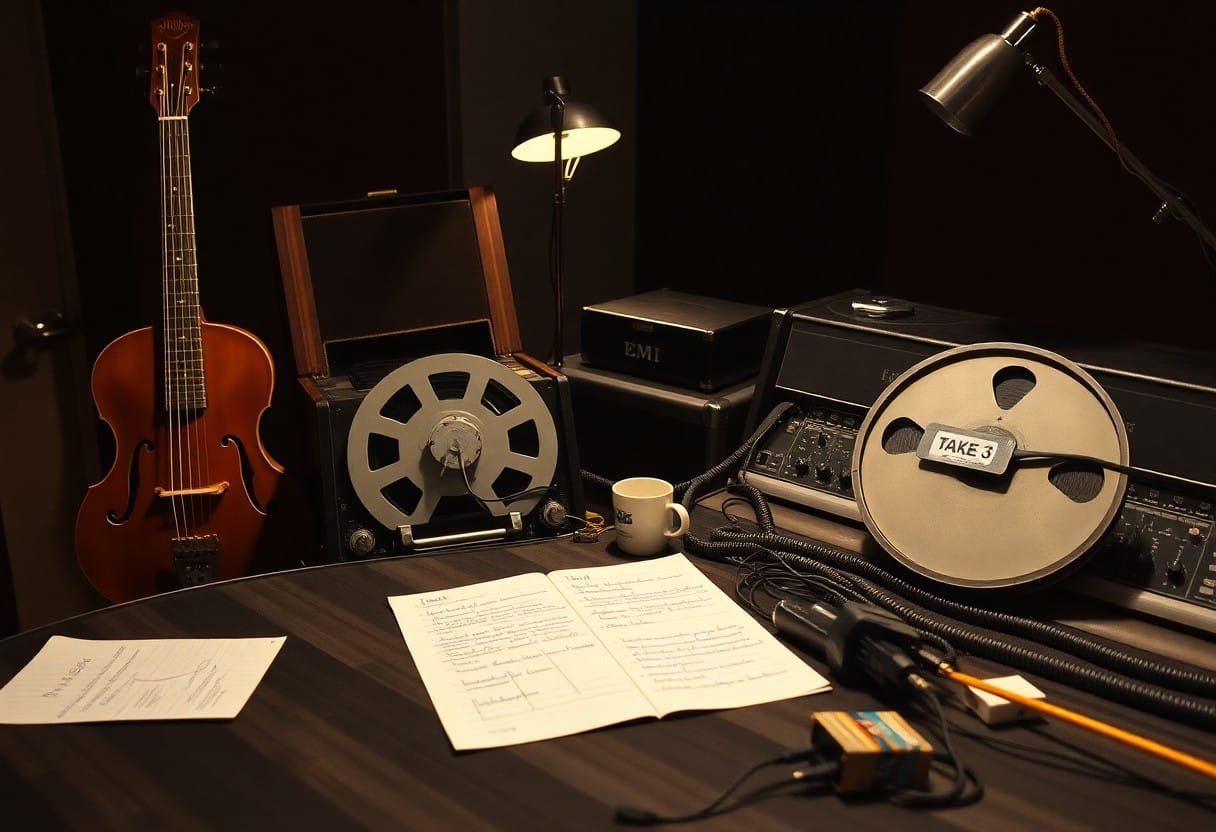
Across their 13 UK studio albums (1963-1970) I trace a leap from Liverpudlian rock’n’roll to studio-driven psychedelia and chamber pop. Rubber Soul (1965) sharpened lyrical depth, Revolver (1966) introduced tape techniques and ADT, and Sgt. Pepper (1967) treated the studio as an instrument. You can see how repeated studio risk, guided by George Martin and engineers like Ken Townsend, converted technical experiments into lasting musical language.
Early Influences and Inspirations
Rooted in Liverpool skiffle and intense Hamburg residencies (1960-62), they developed endurance and tight ensemble playing that underpinned later complexity. I point to direct influences-Little Richard’s vocal attack, Chuck Berry’s riffs, Buddy Holly’s melodic clarity, plus Motown/Stax rhythm phrasing-and the Lennon-McCartney partnership formed in 1957, which seeded the melodic and lyrical framework you hear evolving across their catalog.
Notable Innovations in Songwriting
Among innovations, they fused genres and production into songwriting: classical arrangements on “Eleanor Rigby” (1966), Indian timbres on “Norwegian Wood” (1965), and tape-loop drones on “Tomorrow Never Knows” (1966). I note “A Day in the Life” (1967) for merging two distinct song sections with an orchestral climax, and you can hear how modal shifts and unexpected chord moves redefined pop structure and listener expectations.
For example, “Strawberry Fields Forever” (1967) spliced takes at differing speeds to create unique timbral textures, while “Penny Lane” paired a piccolo trumpet solo with baroque‑tinged harmonies. Harrison’s sitar study with Ravi Shankar after 1965 broadened their palette toward non‑Western scales, and I argue these cross‑cultural and studio experiments expanded what a pop song could be, influencing countless artists and producers thereafter.
The Role of Risk-Taking in Their Music
I argue that risk-taking turned the Beatles from hit-makers into seismic innovators, and you can draw business lessons from this in What Entrepreneurs Can Learn from The Beatles. I point to 1965’s Rubber Soul, 1966’s Revolver and 1967’s Sgt. Pepper as deliberate gambits: they embraced sitar, tape loops and orchestral arrangements that redefined charts and influenced every generation after them.
Pushing Boundaries in Genre
I track how they blurred genre lines-Norwegian Wood (1965) introduced sitar-led melodies into pop, Eleanor Rigby (1966) used a string octet in a rock context, and by Sgt. Pepper (1967) they mixed psychedelia, vaudeville and classical touches; you can see how those moves remapped what a pop band could be and opened new markets for artists worldwide.
Experimentation with Sounds and Styles
I emphasize studio choices as creative risk: on Tomorrow Never Knows (1966) they layered tape loops and reversed sounds, on Strawberry Fields Forever (1967) they combined two takes with different tempos, and they adopted ADT and Mellotron to expand texture-techniques that turned the studio into an instrument you and I still study today.
I can cite Geoff Emerick’s engineering on Revolver, Ken Townsend’s ADT invention in 1966, and the painstaking splice of two Strawberry Fields takes as concrete examples: Emerick moved mics closer, reduced bass boom, and used radical EQ; Townsend’s ADT saved time while creating new vocal textures; the two‑take splice showed they would sacrifice convention to achieve a singular sonic result.
Cultural Impact and Legacy
I still point to their 1964 Ed Sullivan moment and subsequent global sales-over 600 million records and 20 Billboard Hot 100 number ones-as markers of lasting influence; you can debate timing here: At what point in their career do you reckon the Beatles … Their shifts from pop to psychedelia altered commercial and artistic expectations for bands worldwide.
Shaping Popular Music Trends
I point to Revolver (1966) and Sgt. Pepper (1967) as turning points: multitrack overdubbing, reverse tapes, and the sitar on “Norwegian Wood” pushed producers and bands to experiment, and shifted your expectations of pop production. You can trace that to the rise of psychedelic rock, baroque pop, and the mainstream acceptance of albums as cohesive artistic statements.
Influence on Future Generations of Artists
I emphasize how Lennon-McCartney songwriting-more than 200 originals-and the band’s self-contained model inspired groups like Oasis and Radiohead. You hear their harmony structures and melodic phrasing across decades of charting acts, while their studio risks legitimized treating albums as ambitious projects rather than just singles.
I can point to concrete chains of influence: Brian Wilson credited Rubber Soul and Revolver for inspiring Pet Sounds’ arrangements; Oasis modeled melodies and band identity on Lennon-McCartney and dominated UK charts in the 1990s; Radiohead and Beck cite Beatles studio experimentation as a precedent for blending pop with avant-garde production, which reshaped how labels and artists approached album-making.
The Beatles’ Immortality in Music History
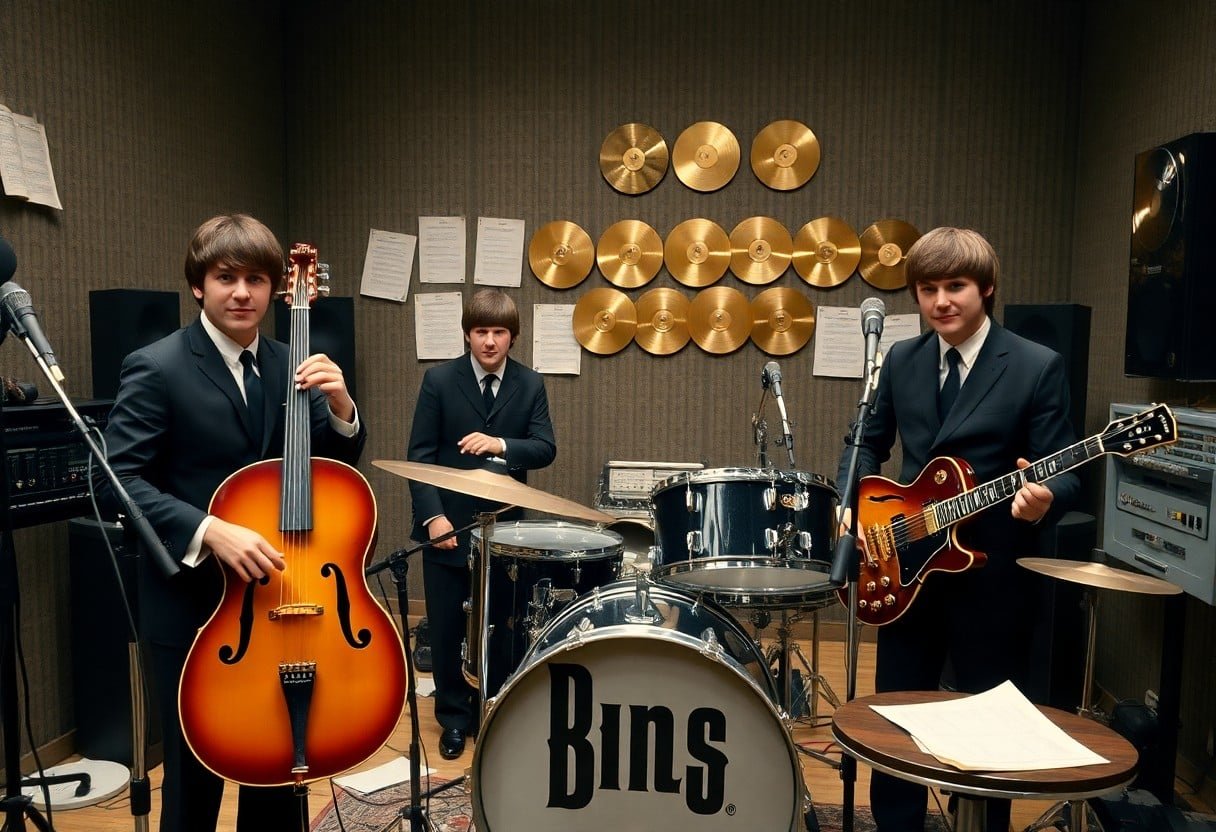
I see their immortality in measurable terms: over 600 million records sold worldwide, 20 US Billboard Hot 100 No. 1 singles, and albums like Sgt. Pepper (1967) that rewired pop. You can trace sustained interest through reissues and scholarly essays such as The Beatles: A Legacy of Innovation and Elusiveness, which maps how innovation plus cultural timing locked their work into the global canon.
Enduring Popularity and Recognition
I note ongoing recognition: Rolling Stone consistently ranks them among the greatest artists, they’ve won multiple Grammy Awards including a Lifetime Achievement honor, and generations still cite Beatles albums as formative-parents pass down vinyl, while streaming playlists introduce tracks to teenagers. Your experience of hearing Beatles songs in films, commercials, and cover versions keeps them visible in daily life and cements their popular standing.
Analysis of Their Lasting Appeal
I attribute their staying power to songwriting craft, studio innovation, and emotional range-Lennon-McCartney material plus George Harrison’s contributions created melodic hooks and lyrical depth, while songs like “Yesterday” (covered over 2,200 times) demonstrate cross-genre adaptability that keeps their catalog relevant.
I can expand on mechanics: George Martin’s arrangements and Abbey Road Studio techniques-ADT, tape loops, artificial double tracking, backward guitar, and multitrack experimentation-turned pop songs into new sonic possibilities, as on Revolver and Sgt. Pepper. You’ll find specific cases: string octets on “Eleanor Rigby” reframed pop with classical timbres, the sitar on “Norwegian Wood” globalized texture, and the production on “A Day in the Life” fused orchestral crescendo with studio collage. I also point to influence chains-Paul Simon, Radiohead, hip-hop producers sampling Beatles-era sounds-showing direct lineage. Chart dominance and catalog sales give one metric, but pedagogical uptake (music curricula analyzing their form), licensing ubiquity, and the continual stream of covers and remixes create a feedback loop: each reinterpretation reintroduces Beatles songs to new audiences, reinforcing their canonical status rather than letting it fossilize.
Contemporary Relevance
Modern Interpretations of Beatles’ Work
I track modern reinterpretations that show their songs function as living templates: Joe Cocker’s 1969 revamp of “With a Little Help from My Friends” recast it for festival rock, Cirque du Soleil’s Love (2006) reassembled studio tapes into a persistent global production, and jazz, electronic and orchestral artists routinely mine their motifs-given the band’s estimated 600 million records sold, you can see why producers and DJs keep reworking Beatles material into new contexts.
The Resurgence of Interest in Their Music
I point to clear catalysts: the 2009 remasters and the catalog’s 2015 arrival on streaming platforms opened access for new listeners, Giles Martin’s 50th‑anniversary remixes of Sgt. Pepper (2017) and Abbey Road (2019) created collector momentum, and Peter Jackson’s Get Back (2021) drove measurable spikes in streams and social conversation-so you can tie renewed attention to coordinated archival releases and high‑profile media events.
I analyze how those catalysts compound: remastered box sets give collectors tangible purchase points while streaming places “Hey Jude” and “Come Together” directly into algorithmic playlists that younger audiences follow, archival documentaries reframing the band’s creative process generate press and playlisting, and anniversary editions paired with deluxe liner notes or unreleased takes turn casual listeners into engaged fans. You’ll see the effect in repeated chart re‑entries and sustained streaming growth whenever Apple Corps times a deluxe release with a documentary or tour‑adjacent event.
Final Words
Hence I assert that the Beatles’ relentless creativity and appetite for risk substantially secure their place in music history; I see their innovations continually recycled and reinterpreted, proving their work transcends eras. If you study their catalog and your listening shapes new artists, their influence remains active rather than static. I maintain that while cultural shifts can reframe legacies, their artistic daring makes them as close to immortal as popular music allows.
FAQ
Q: How did evolving creativity and risk-taking help make The Beatles’ place in music history so lasting?
A: The Beatles continually reinvented their sound-moving from pop skiffle to folk, psychedelia, orchestral pop and avant-garde experiments-so each phase expanded what popular music could be. They embraced studio technology (multitracking, tape loops, varispeed), unconventional instrumentation, and nontraditional song structures, which pushed peers and successors to rethink production and composition. Their willingness to blend genres and to put artistic statements ahead of formulaic hits created a body of work rich in variety and innovation, so listeners and scholars revisit their catalog for both craft and cultural resonance.
Q: If The Beatles had kept collaborating and taking risks after 1970, could they have become even more legendary?
A: Continued collaboration and innovation might have deepened their legacy, but outcomes depend on interpersonal dynamics, artistic choices and cultural context. Sustained experimentation could have produced influential late-period work that reshaped subsequent trends, while divergent solo paths already expanded their individual influence. However, creative risk can also lead to uneven results or alienate audiences; the existing arc-rapid innovation followed by a dignified breakup-preserved a concentrated, highly regarded creative peak that contributes to their mythic status.
Q: What practical lessons about creativity and risk-taking can contemporary musicians draw from The Beatles’ example?
A: Prioritize experimentation in songwriting and production to differentiate your work; use new technologies as tools, not gimmicks; welcome collaboration to combine strengths and challenge assumptions; balance artistic ambition with accessibility so risks can still connect with listeners; document processes and evolve visibly so audiences can follow the journey. Strategic, disciplined risk-taking builds long-term artistic relevance more reliably than repeating past successes.