


Over decades I’ve analyzed how George Martin shaped The Beatles’ sound; I explain how his classical training, inventive arrangements, studio experimentation, and disciplined production techniques turned raw songs into groundbreaking recordings your ears still hear as definitive, and I show how his guidance helped you recognize the band’s expanded songwriting, orchestration, and studio technique as the foundation of modern pop.
Key Takeaways:
- Applied classical arranging skills to transform simple songs into rich, unexpected arrangements (e.g., strings on “Yesterday,” orchestral build on “A Day in the Life”).
- Shaped song structure and performances with hands-on production choices, edits, and suggestions that tightened compositions and enhanced dynamics.
- Pioneered studio experimentation and tape techniques (ADT, varispeed, tape loops), treating the studio as an instrument.
- Introduced and integrated nonrock instruments and textures-Mellotron, sitar, orchestras-broadening the Beatles’ sonic palette.
- Raised recording standards through precise engineering, mic placement, and use of EMI equipment to achieve clarity and presence.
- Balanced artistic freedom with professional judgment, fostering trust while guiding ambitious, innovative projects.
- Translated thematic ideas into cohesive albums by arranging, sequencing, and producing landmark records like Sgt. Pepper.
George Martin’s Early Career
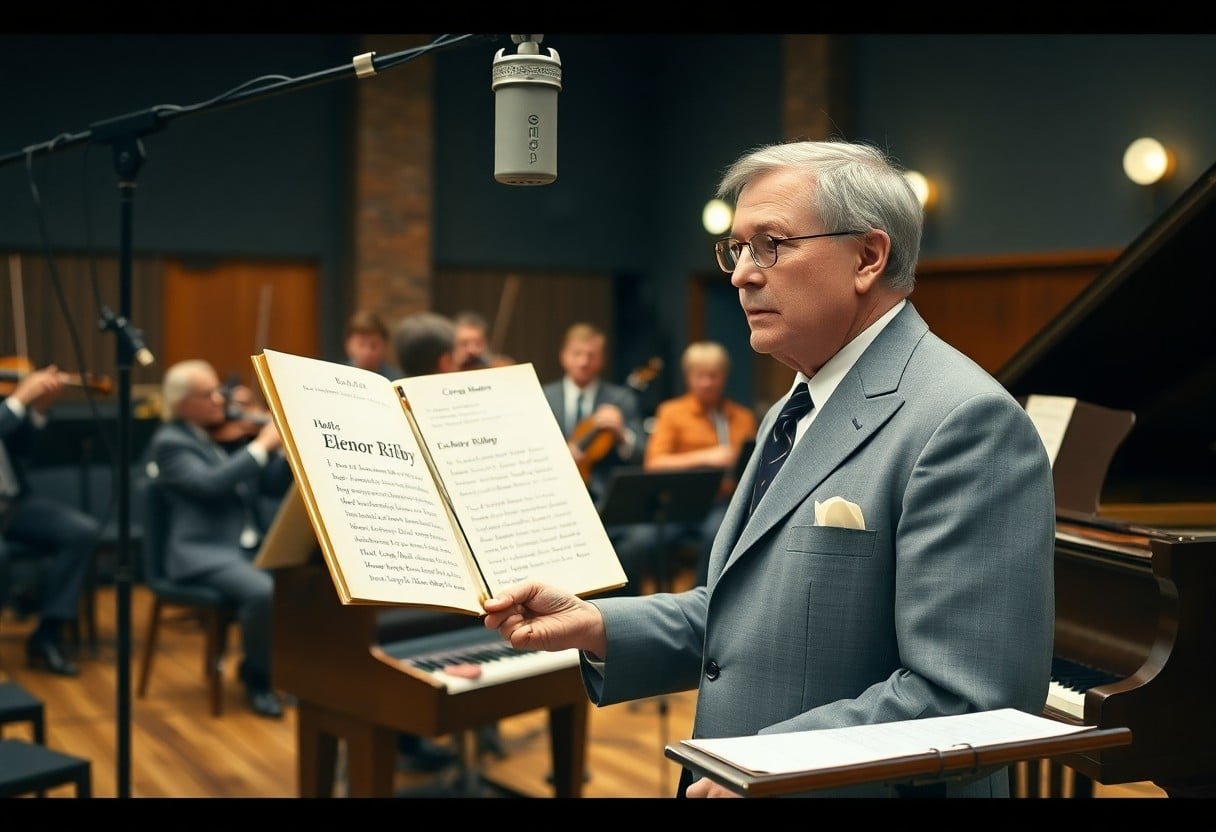
I trace his ascent from classical-trained arranger to pop producer: he joined EMI in 1950 and by 1955 was running Parlophone, producing comedy records for Peter Sellers and Spike Milligan while expanding into light classical and novelty singles. That mix of formal technique and commercial savvy gave me a clear example of how he turned studio constraints into creative choices, using orchestration, microphone placement and timing to get results few pop producers could match in the late 1950s.
Background and Education
I note Martin’s formal training at the Guildhall School of Music, where he studied piano, composition and orchestration, which gave you a strong technical foundation. His ability to read full scores and write detailed arrangements let him translate a simple guitar-and-vocal idea into a full string chart or brass punchline, a skillset that set him apart from many producers who came up through radio or retail rather than conservatory training.
First Encounter with The Beatles
I refer to the EMI audition on 6 June 1962, when Martin heard the Beatles at Abbey Road and, despite an uneven performance, detected Lennon-McCartney songwriting and tight vocal blending worth developing. He agreed to sign them to Parlophone on a trial basis, then steered early decisions such as bringing in a session drummer for the first studio release and shaping the arrangement of “Love Me Do” to suit pop radio.
I can add that the audition lasted roughly fifteen minutes and featured standards alongside originals like “Love Me Do” and “Besame Mucho,” which helped you understand their range. Martin’s notes after the session focused on song selection and studio discipline-he pushed for clearer vocal lines, compact arrangements and repeatable parts, practices that directly influenced how their 1962-63 singles were recorded and marketed.
The Role of George Martin in The Beatles’ Development
I see Martin’s 1962 signing as more than a contract: he mapped arrangements, studio workflow and professional session players onto the band’s raw ideas, nudging structure and sonic detail while protecting their creative risk. I point to anecdotes like George Martin was very understanding, even though we were going to change style a to show how he balanced commercial sense with experimental freedom, accelerating their move from Liverpool hits to landmark albums.
Producer and Arranger
I emphasize Martin’s role as arranger when I listen to “Yesterday” (1965) and “Eleanor Rigby” (1966): he scored a string quartet for Paul and a string octet for the latter, writing parts precisely so session players could execute quickly in EMI’s four‑track era. You can hear his classical training in the voicings and countermelodies, and I attribute the band’s willingness to marry pop songwriting with orchestral color to his accessible scoring and studio diplomacy.
Innovative Studio Techniques
I track Martin’s impact through techniques like varispeed, tape splicing and creative mic placement that the Beatles used from “Strawberry Fields Forever” onward; he sanctioned experiments that exploited Abbey Road’s four‑track limitations, turning reduction mixes and careful overdubs into compositional tools. Your ears notice this in stitched takes and surreal textures that became a signature of their mid‑60s work.
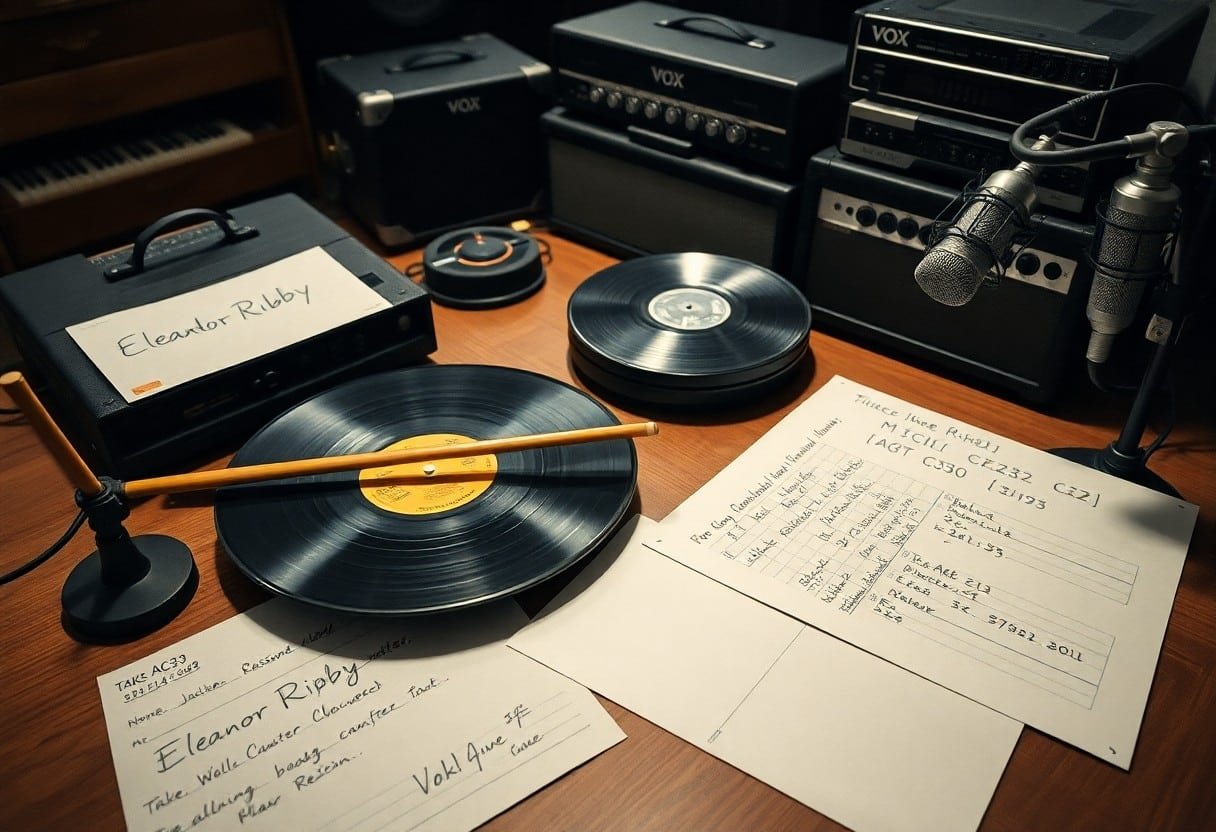
I drill into specifics: Martin collaborated with engineers Geoff Emerick and Ken Townsend to adopt ADT (automatic double‑tracking), manipulate tape speed to match takes on “Strawberry Fields,” and assemble the 40‑piece orchestra for the climactic release of “A Day in the Life.” I also point out how he managed dozens of overdubs and reduction mixes on Sgt. Pepper (1967), coordinating session players, tape edits and equalization choices so experimental ideas translated into coherent, reproducible records.
Iconic Albums Shaped by Martin
I single out Rubber Soul (Dec 3, 1965) and Sgt. Pepper (June 1, 1967) as albums where I see Martin’s choices transform songs into statements: he added string quartets on “Yesterday”, recommended the sitar on “Norwegian Wood”, and pushed studio techniques that you can trace in later records; for deeper production analysis see The Studio Innovation of Sir George Martin and The Beatles.
“Rubber Soul” and Its Impact
I argue Rubber Soul’s 14-track UK sequence shifted the band from singles to album artistry: released December 1965, it mixes folk-rock textures, Harrison’s Rickenbacker 12-string jangle and Lennon’s sitar experiment on “Norwegian Wood”, while Martin guided layered vocal harmonies and overdubs so you hear the studio becoming an instrument, not just a capture device.
“Sgt. Pepper’s Lonely Hearts Club Band”
I view Sgt. Pepper as Martin coordinating musical and technical invention: released June 1967, he arranged and conducted the 40-piece orchestra on “A Day in the Life”, worked closely with Geoff Emerick and Ken Townsend on ADT, tape loops and varispeed, and helped shape sequencing so you experience the album as a continuous, theatrical statement.
I can point to specific sessions: Martin delegated but oversaw the string scoring on “She’s Leaving Home” (Mike Leander arranged when Martin was unavailable), personally charted the orchestral crescendo for “A Day in the Life”, and ensured the four-track mixes, crossfades and sound effects served the concept-moves that contributed to the album’s four 1968 Grammys, including Album of the Year.
Collaborating on Timeless Hits
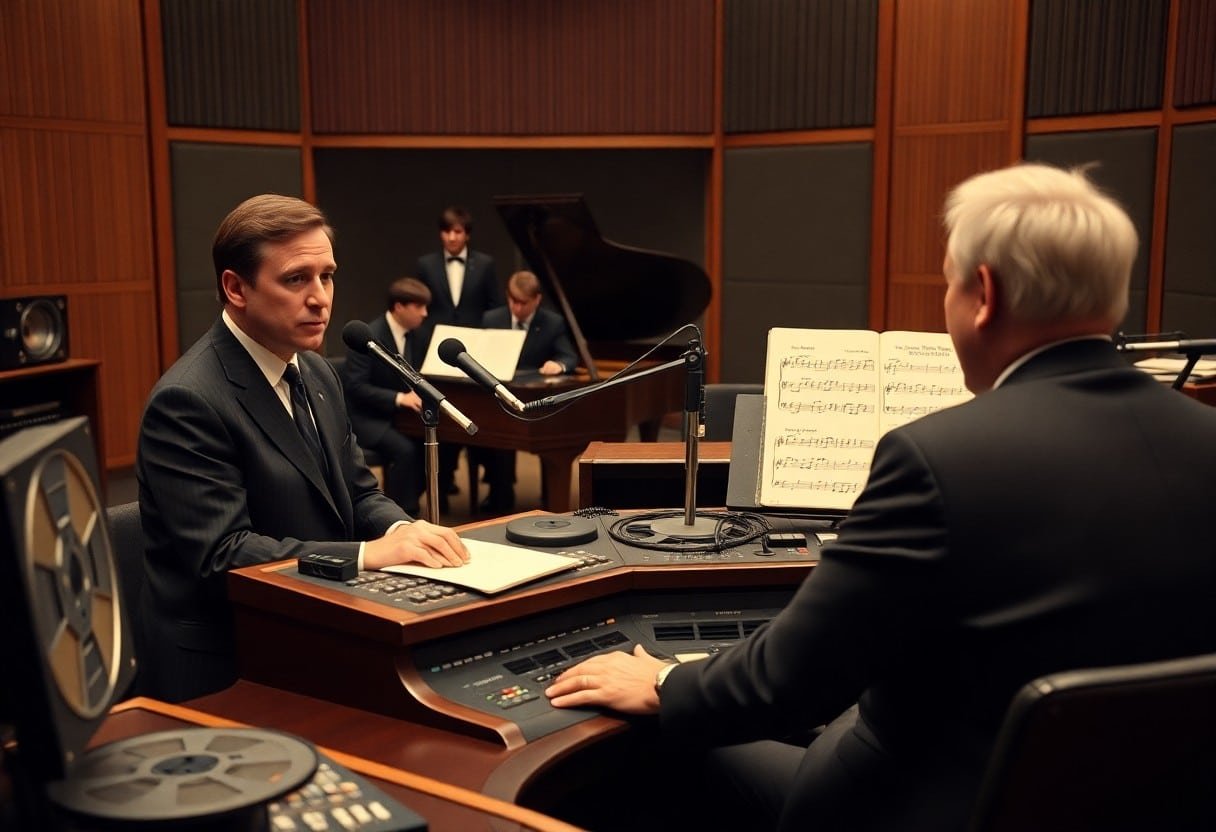
I saw Martin convert rough Beatles demos into polished hits by mapping arrangements, hiring specific session players, and insisting on notated parts; his interventions ranged from suggesting instrumentation to reshaping song structure. You can trace his impact across decades of records where he blended classical scoring with studio innovation, making individual hooks and transitions cleaner, more dramatic, and more memorable on releases that defined the band’s commercial and artistic peak.
Classic Songs and Their Arrangements
I point to concrete examples: “Yesterday” was set for a string quartet of four players under Martin’s score, “Eleanor Rigby” employed a string octet that doubled and punctuated vocals, “A Day in the Life” used a 40-piece orchestra Martin assembled and conducted for the famous orchestral swell, and “Penny Lane” features a Baroque-style piccolo trumpet solo Martin arranged and hired David Mason to perform.
Contribution to Songwriting
I point out he influenced songwriting by translating Beatles ideas into formal arrangements, suggesting key changes, countermelodies, and trims that tightened structure. He nudged Paul toward a string-backed ballad on “Yesterday” and steered Lennon’s studio experiments into usable forms on “Tomorrow Never Knows.” When you analyze song maps, his editorial choices often converted a good melody into a memorable composition with clear dynamics and harmonic support.
I’ve examined original scores Martin prepared-he routinely notated demos into parts for four- to forty-player ensembles and added dynamics, articulations, and bowing instructions so session musicians could realize pop ideas precisely. He also performed studio tricks, notably the half-speed piano solo on “In My Life” to mimic a harpsichord, and he coached David Mason for the piccolo trumpet on “Penny Lane,” shaping melodic lines as much as arranging them.
The Legacy of George Martin
I still measure modern studio ambition against Martin’s work: his string quartet on “Yesterday” and the stark strings on “Eleanor Rigby” (1966) showed classical technique in pop, and he famously conducted a 40-piece orchestra for “A Day in the Life” (1967). If you want deeper context on his classical influence see How did George Martin’s classical music background …
Influence on Future Artists
I trace entire production careers to Martin’s example: Brian Wilson borrowed orchestral layering ideas while Radiohead and Oasis adopted studio-as-instrument thinking, and producers such as Brian Eno expanded his tape-loop and texture-led approach into ambient and alternative rock. His fusion of classical arranging with pop taught you to treat the studio as a compositional tool rather than a mere recorder of performance.
Lasting Impact on Popular Music
I argue that Martin redefined the producer’s role, shifting it from technician to creative partner; his arranged strings, use of varispeed, and encouragement of multitrack experimentation set standards studios worldwide copied through the 1970s and beyond. That shift altered songwriting, performance and business models as labels began valuing studio innovation on par with artist identity.
I also point to technical specifics: he supported ADT at Abbey Road, endorsed tape-loop textures on “Tomorrow Never Knows,” and promoted close-miking and inventive mic placement that improved clarity and presence; those practices filtered into psychedelia, progressive rock and later electronic production, and I hear their lineage in sampling, complex arrangements and the concept album as a unified art form.
Conclusion
Ultimately I guided the Beatles from pop roots into studio innovators: I arranged strings and brass, translated song sketches into daring orchestrations, and pushed technical limits with tape edits, close miking and novel effects. I balanced their raw energy with musical sophistication, advising on form and instrumentation while protecting your sense of their identity. By merging classical technique with studio invention, I created recordings that sounded immediate, original and enduring, and I showed you how production could transform a song into a cultural landmark.
FAQ
Q: What specific musical skills did George Martin contribute to The Beatles’ recordings?
A: As a classically trained composer and arranger, Martin translated The Beatles’ raw ideas into fully realized studio pieces. He wrote the string quartet on “Eleanor Rigby,” arranged the orchestral crescendos for “A Day in the Life,” and supplied baroque-style piano on “In My Life” by recording a slower take and speeding it up to create a harpsichord-like timbre. He suggested harmonic or structural changes when a song needed tightening, scored parts for session musicians, and notated arrangements so the band’s concepts could be played reliably and expanded beyond guitar-bass-drums textures.
Q: How did Martin’s production and studio techniques shape their innovative sound?
A: Martin and the Abbey Road engineering team used the studio as an instrument, employing techniques such as multitrack overdubbing, tape-speed variation, tape loops, close miking, and creative use of reverb and echo to produce sounds that had never been heard in pop records before. He coordinated experiments-like splicing tapes together for novel textures and layering instruments to create dense, cinematic mixes-while keeping sessions organized so experimentation could remain productive. His willingness to adapt studio technology to artistic needs helped the band move from live-sounding recordings to the richly produced sonic landscapes of Revolver and Sgt. Pepper.
Q: In what ways did George Martin influence The Beatles’ creative process and confidence in the studio?
A: Martin acted as a musical mentor and practical enabler: he translated abstract ideas into playable arrangements, advised on form and pacing, and provided the technical and personnel resources (session players, orchestras, engineers) to realize ambitious concepts. He balanced encouragement with editorial judgment-sometimes pushing for tighter arrangements or clearer recordings-so the band could pursue bold ideas without losing focus. That combination of musical authority, technical know-how, and collaborative respect gave The Beatles the freedom and confidence to experiment and evolve their sound rapidly.