

Just as Liverpool’s port and Hamburg’s club circuit immersed them in American rock, I trace how skiffle, R&B, music hall traditions, Indian music, and classical ideas combined with Brian Epstein’s management and George Martin’s studio craft to shape their songwriting, arrangements, and public persona; I show you how social change and recording technology further amplified their originality and why your understanding of the band deepens when these strands are connected.
Key Takeaways:
- American rock ‘n’ roll and R&B (Elvis, Chuck Berry, Little Richard, Buddy Holly) shaped their early sound and stagecraft.
- Skiffle and the Liverpool/Merseybeat scene provided a DIY ethos, local venues, and peer influence.
- Hamburg residencies honed performance stamina, tight arrangements, and a larger repertoire.
- Lennon-McCartney songwriting partnership drove melodic invention, lyrical growth, and creative rivalry.
- George Harrison’s study of Indian music introduced sitar, modal approaches, and spiritual themes.
- Producer George Martin and Abbey Road studio innovations enabled orchestration, tape techniques, and experimental production.
- Manager Brian Epstein professionalized their image, booking, and global promotion.
Early Life and Background
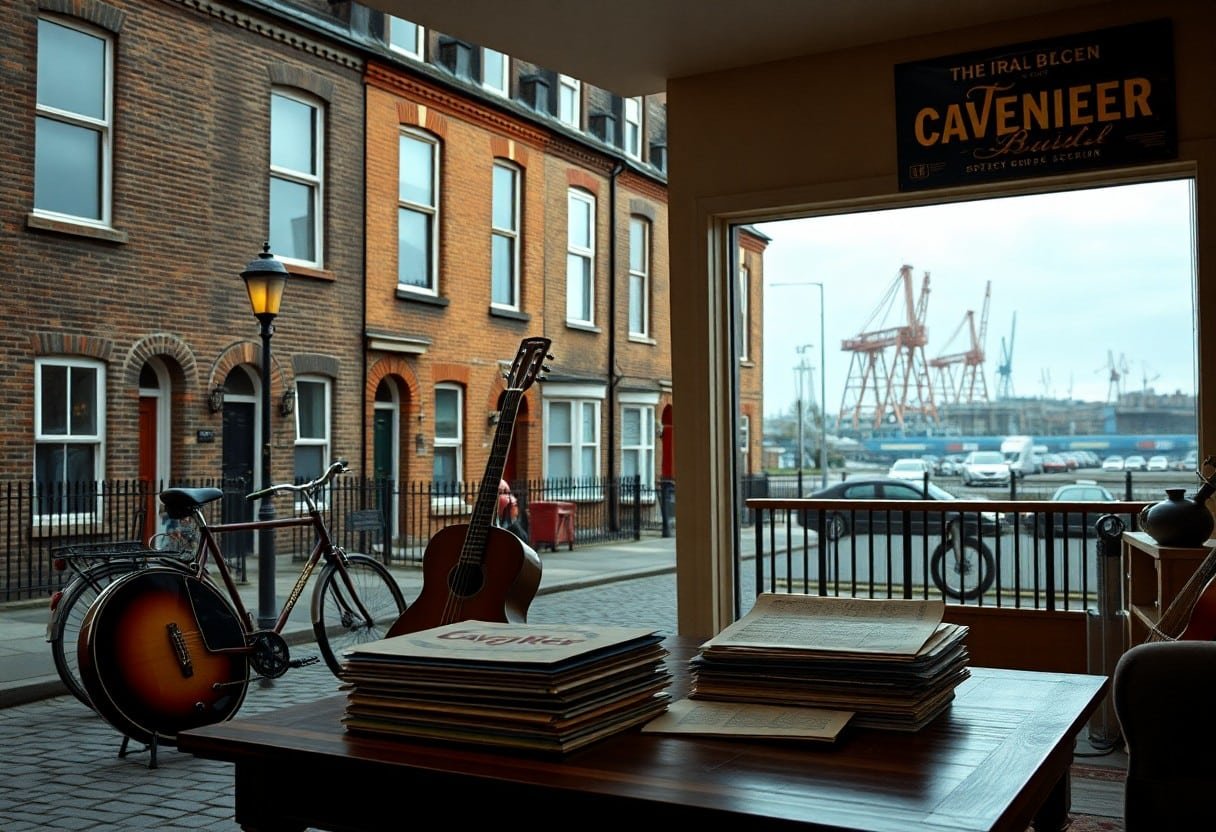
I trace their roots to Liverpool: John Lennon (b. 1940), Paul McCartney (1942), George Harrison (1943) and Ringo Starr (1940) grew up amid Woolton streets and the docks. I note John’s 1957 meeting with Paul at St. Peter’s Church fete and the Quarrymen skiffle period, then their Hamburg grind (1960-62), where hundreds of club appearances hardened timing, harmony and stagecraft you can hear on early singles like “Love Me Do” (1962).
Family Influences
I see family as a mosaic of encouragement and loss: John learned ukulele and banjo from his mother Julia before her 1958 death and was raised by Aunt Mimi; Paul had supportive parents who allowed musical pursuits; George benefited from older siblings and early exposure to guitar; Ringo’s repeated childhood hospital stays gave him time with radio and records. These dynamics shaped instrument choices, lyrical empathy and a work ethic I trace through their early rehearsals and tours.
Social Environment
I emphasize Liverpool’s port culture as a live wire: American R&B, rock, country and jazz records flowed in on ships, Lonnie Donegan’s skiffle scene energized local teens, and you had record shops, dance halls and youth clubs where trends circulated fast. That working‑class Merseyside context supplied humor, storytelling and a competitive gig circuit that pushed them to refine songs and stage persona.
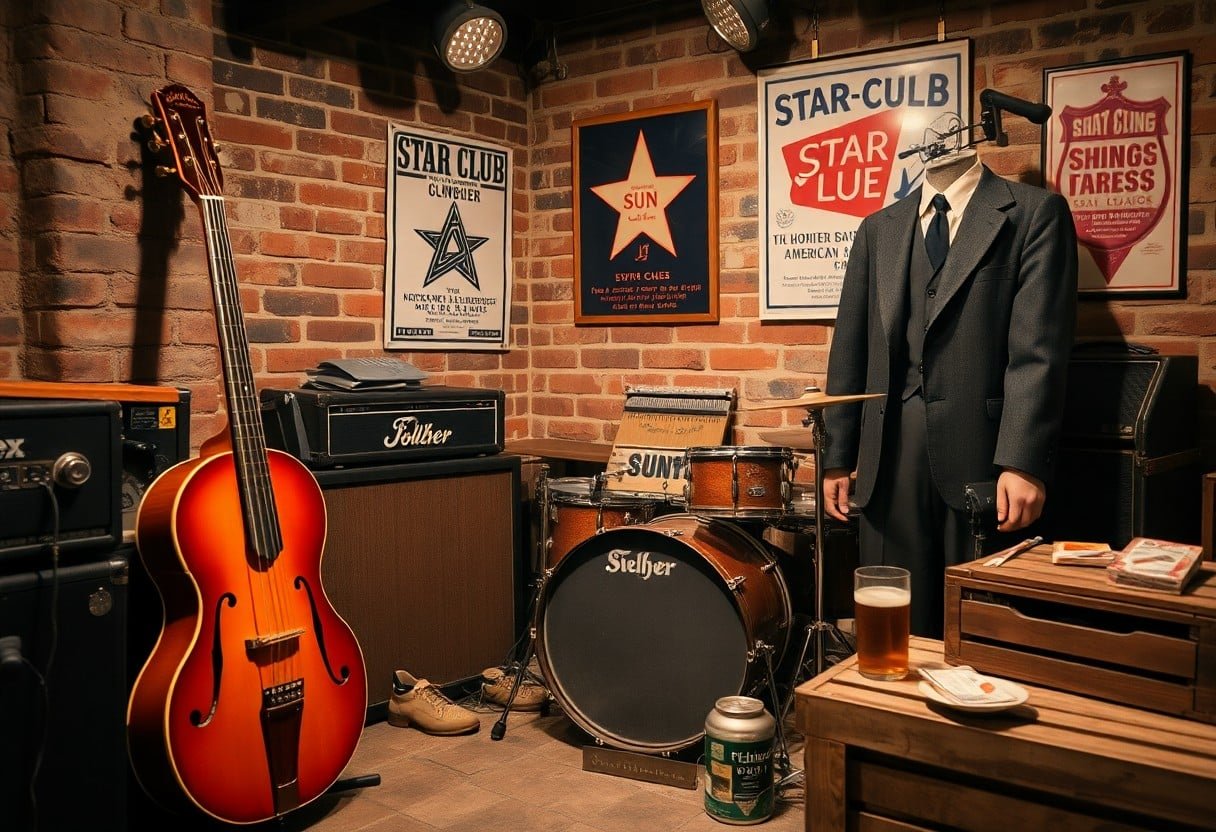
I add that venues defined them: at the Cavern Club (opened 1957) they played roughly 292 times between 1961-63, building a local base, and in Hamburg’s Indra, Kaiserkeller and Top Ten Club (1960-62) they endured marathon sets-sometimes six to eight hours nightly-tightening arrangements and stamina. I argue those specific clubs, the cross‑channel record trade and rivalry with other Liverpool bands demanded constant reinvention you can hear across their catalog.
Musical Influences
I map their evolution through skiffle, American R&B and island sounds; if you want a detailed source I recommend Who Really Influenced The Beatles? | by Alex Markham, which shows how Lonnie Donegan, Little Richard and Chuck Berry populated early setlists and how the Hamburg 1960-62 marathon gigs hardened their performance stamina.
Early Inspirations
Skiffle’s 1957 boom pulled me into how Lennon and McCartney formed the Quarrymen (1956) and learned DIY arranging; I see Elvis’s 1956 arrival and Buddy Holly’s concise songwriting shaping their approach, and you can hear those influences in the simple three-chord structures and direct vocal phrasing of their pre-1962 repertoire.
Key Genres and Artists
I find American rock’n’roll, R&B, Motown, country and gospel threaded through their recordings; you’ll hear Chuck Berry riffs on “Roll Over Beethoven,” Carl Perkins twang on “Matchbox,” and Little Richard’s vocal intensity on “Long Tall Sally,” all filtered into the Merseybeat framework they developed by 1963.
Digging deeper, I note their early albums lean heavily on covers that taught them arrangement and studio craft: “Twist and Shout” (raw vocal technique), “Money (That’s What I Want)” (R&B phrasing) and multiple Chuck Berry numbers (guitar vocabulary). I also hear Everly Brothers-style harmonies informing McCartney/Lennon duet writing, which later allowed them to synthesize Indian, orchestral and studio innovations with authority.
Cultural Context
I tie their evolution to mass media and global youth culture: the Beatles’ Feb 9, 1964 Ed Sullivan appearance reached about 73 million viewers and Shea Stadium in 1965 drew 55,600 fans, demonstrating scale. I point you to contemporary discussions like What are some examples of the Beatle’s huge influence on … and note that selling over 600 million records reshaped music commerce and identity worldwide.
The 1960s Social Landscape
I place their songwriting inside civil rights activism, Vietnam War protests, and the 1967 Summer of Love; you hear this in “Eleanor Rigby” (1966), “All You Need Is Love” (1967) and “Revolution” (1968). I emphasize that the Our World broadcast of “All You Need Is Love” reached roughly 400 million viewers, showing how their music intersected with global politics and shifted audience expectations for lyrical substance.
The British Invasion
I identify the Beatles as the catalyst of the 1964 British Invasion: on April 4, 1964 they held the top five Billboard Hot 100 positions simultaneously, which opened American charts to UK acts like the Rolling Stones, the Who and the Kinks. I argue you can trace changes in radio programming, record deals, and youth fashion directly to that surge.
I expand on industry impact by noting studio innovation and songwriting standards: George Martin’s production on Revolver (1966) and Sgt. Pepper (1967) introduced multitrack layering and orchestral touches-“Yesterday” pushed strings into pop-and I maintain your sense of modern album craft owes much to how the Beatles proved experimentation sold millions and rewrote expectations for recorded music.
Personal Relationships
Friendships and Collaborations
I link many turning points to friendships and collaborations: Brian Epstein discovered them at the Cavern Club in 1961 and by 1962 secured their Parlophone deal, while producer George Martin shaped arrangements-he gave “Yesterday” a string quartet and “Eleanor Rigby” an octet. I note Lennon-McCartney wrote over 180 songs together, and guest players like Eric Clapton (lead on “While My Guitar Gently Weeps”, 1968) and Billy Preston (credited on “Get Back”, 1969) altered textures you hear across albums.
Romantic Relationships
I observe how partners affected songwriting and studio climate: John married Cynthia in 1962, then Yoko Ono in 1969, whose constant presence changed session dynamics; Paul married Linda Eastman in 1969 and she inspired “Maybe I’m Amazed”; George wed Pattie Boyd in 1966, who inspired “Something” (1969); Ringo married Maureen in 1965. These unions influenced lyrical focus, touring choices, and the band’s public image in measurable ways.
I can point to direct effects you can trace: Yoko’s attendance during the January 1969 Get Back sessions intensified internal friction and public perception of division, Linda’s partnership led Paul to form Wings in 1971 and renew his post-Beatles output, and Pattie Boyd’s relationships with George and later Eric Clapton sparked songs like “Something” (1969) and Clapton’s “Layla” (1970), showing how marriages and affairs reshaped creative priorities and alliances.
Artistic Evolution
I chart their artistic evolution through landmark records-Rubber Soul (1965), Revolver (1966) and Sgt. Pepper’s (1967)-which show rapid stylistic shifts and studio ambition, and I cite how later acts acknowledge that debt via testimony like The Beatles deeply influenced us from our records to live …; you can hear tighter arrangements, expanded instrumentation and lyrical maturity across those three years.
Transition from Skiffle to Rock
I map their shift from 1950s skiffle-inspired by Lonnie Donegan and DIY home-made instruments-to the rock repertoire of Chuck Berry and Little Richard by the late 1950s; you can attribute much of their grit to the Hamburg period (1960-62) where they played 300+ shows, sharpening timing, lead breaks and stagecraft that propelled the jump from local skiffle sets to tight rock bands.
Experimentation in Music and Lyrics
I point to specific experiments: “Norwegian Wood” (1965) brought the sitar, “Tomorrow Never Knows” (1966) used tape loops and reversed guitars, and “Eleanor Rigby” (1966) featured a string octet-so you see a deliberate move into nontraditional textures and introspective, narrative lyrics that widened their expressive palette.
I can expand: engineers and producers mattered-Ken Townsend’s ADT (1966) and Geoff Emerick’s close-miking on Revolver let me hear new timbres within four-track constraints, so the band learned studio-as-instrument techniques; you should note they quit touring after August 29, 1966 (Candlestick Park), which freed months of studio time leading to Sgt. Pepper and A Day in the Life’s orchestral crescendos, varispeed effects, unconventional structures and modal shifts; I consider those technical choices plus lyrical turns toward surrealism and social observation central to their late-1960s identity.
Legacy and Impact
I still point to the Beatles’ seismic legacy: over 600 million records sold worldwide, 20 U.S. number-one singles, and the way they shifted pop from singles to cohesive albums like Sgt. Pepper (1967), which reframed studio technique, album sequencing, and artistic ambition for generations of musicians and producers.
Influence on Future Musicians
I see direct lines from the Beatles to bands such as Oasis and Coldplay-Noel Gallagher names them as a primary influence-and you can trace McCartney’s melodic bass lines, Lennon’s candid lyricism, and George Martin’s production tricks (multitracking, tape loops, orchestral scoring on “A Day in the Life”) in countless artists’ work.
Cultural Significance
I point to key moments: their Ed Sullivan appearance on February 9, 1964 drew roughly 73 million U.S. viewers, the Our World broadcast of “All You Need Is Love” reached about 400 million in 1967, and the British Invasion altered fashion, youth identity, and popular discourse across continents.
I also note how their retreat from live touring after 1966-culminating in the Candlestick Park concert and the 1969 rooftop show-shifted emphasis toward studio innovation; films like A Hard Day’s Night (1964) redefined music cinema, and Harrison’s Concert for Bangladesh (1971) established the template for benefit concerts and artist-driven activism.
FAQ
Q: What early musical influences and experiences shaped The Beatles’ sound?
A: Their foundation came from skiffle, American rock & roll and R&B – artists such as Elvis Presley, Chuck Berry, Buddy Holly, Little Richard and Carl Perkins informed their energy, phrasing and song choices. Growing up in Liverpool exposed them to a wide mix of pop, music-hall tunes and the Merseybeat scene, while long residencies in Hamburg forced them to play for hours nightly, tightening their ensemble playing, stagecraft and repertoire. Lennon and McCartney’s songwriting partnership built on those roots, turning raw influences into concise melodies, catchy hooks and close harmonies heard on early records like Please Please Me and A Hard Day’s Night.
Q: How did people around them and industry figures influence their development?
A: Manager Brian Epstein gave them professional presentation, booking opportunities and the industry access that secured their EMI audition, while producer George Martin brought formal musical training, arrangement ideas and studio discipline that expanded their palette. Martin’s openness to experimentation and skilled arranging enabled string octets, brass and orchestral textures on tracks like Eleanor Rigby and A Day in the Life. Peers and mentors – from Liverpool contemporaries to American musicians and later Indian maestros like Ravi Shankar – also steered individual members’ interests (notably George Harrison’s study of the sitar) and fueled creative growth.
Q: Which cultural and technological influences pushed The Beatles into musical innovation?
A: The 1960s cultural shifts – folk revival, Bob Dylan’s literate songwriting, psychedelic art and altered states – broadened their lyrical scope and encouraged studio experimentation. Advances in studio technology (multi‑tracking, tape loops, ADT and creative microphone techniques) and Martin’s willingness to use them produced songs such as Tomorrow Never Knows and Revolver-era textures. They synthesized classical orchestration, Indian instrumentation, avant-garde tape manipulation and pop craftsmanship into albums like Rubber Soul, Revolver and Sgt. Pepper’s, creating original forms that redefined what a rock band could do.