
With Liverpool’s clubs, radio, and maritime culture shaping tastes, I explain how the city’s competitive live circuit, skiffle roots, and access to American records sharpened the Beatles’ skills and repertoire; I show how you can trace their stagecraft, songcraft, and team dynamic to this environment, and I outline specific venues, local influences, and opportunities that turned a local band into a global phenomenon so you can see how context forged their sound and success.
Key Takeaways:
- As a busy port, Liverpool provided early exposure to American R&B, jazz and rock’n’roll through sailors, imported records and radio, shaping the Beatles’ musical vocabulary.
- Skiffle’s DIY ethos encouraged young musicians to form bands, write songs and perform-setting the scene for Lennon, McCartney and Harrison to start playing together.
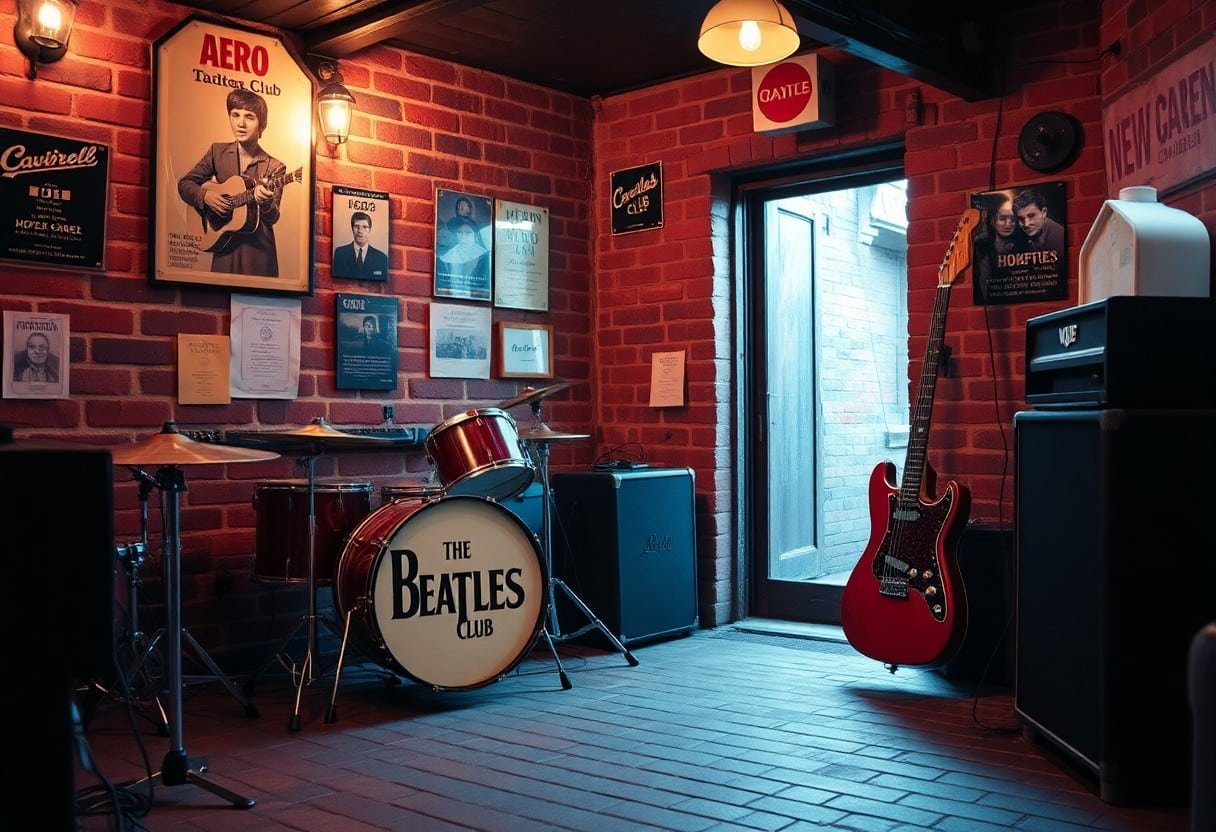
- Local clubs and long residency gigs (most famously the Cavern Club) gave the group constant live practice, tightening their playing, stamina and stagecraft.
- The Merseybeat scene created a dense network of bands, promoters and local press that fostered competition, collaboration and rapid musical development.
- Record shops, local radio and jukebox culture made a wide range of records accessible, expanding the Beatles’ repertoire and influences.
- Connections from the Liverpool scene led to Hamburg residencies, where marathon performances vastly accelerated their musical growth and professionalism.
- Local support-fan bases, promoters and Brian Epstein’s discovery at the Cavern-helped convert regional popularity into professional management and recording opportunities.
Historical Context of Liverpool’s Music Scene
Pre-Beatles Music Influences
I note how Liverpool’s status as a major port and the long-running Liverpool Philharmonic (founded 1840) created a mix of classical, Irish folk and imported American jazz and R&B. You could hear brass-band traditions at community events, Irish ballads in neighborhood homes and 78‑rpm American records arriving on ships and in jukeboxes, seeding a diverse repertoire that youth later drew on when forming skiffle and early rock groups.
The Rise of Skiffle and Rock ‘n’ Roll
Skiffle’s boom after Lonnie Donegan’s 1956 hit “Rock Island Line” (over a million sales) made DIY bands common, and I watched dozens of Liverpool skiffle groups form; you could start a band with a guitar and tea‑chest bass. John Lennon founded the Quarrymen in 1956 out of that scene, and within a few years local sets shifted toward Chuck Berry and Little Richard records as electric rock ‘n’ roll took hold.
I can point to mechanics: skiffle taught rhythmic drive and stagecraft, while Radio Luxembourg and American 45s brought Chuck Berry, Buddy Holly and Eddie Cochran into local juke boxes. You saw the result in auditions-Paul McCartney impressed Lennon by playing “Twenty Flight Rock”-and in venues where washboards gave way to drum kits and amplified guitars, forming the practical template the Beatles honed in Merseyside and Hamburg.
Key Venues and Festivals
I map venues like the Cavern Club, Litherland Town Hall, the Mathew Street Festival and the Liverpool International Music Festival (LIMF, launched 2014) as the scene’s anchors; I point out that the Beatles played the Cavern roughly 292 times between 1961-63, and you can trace how smaller club residencies and larger town-hall bills combined to sharpen their setlists, stagecraft and local reputation before national exposure.
The Cavern Club’s Role
When I focus on the Cavern Club I cite its 1957 opening by Alan Sytner on Mathew Street, the Beatles’ first Cavern gig on 9 February 1961 and Brian Epstein’s November 1961 discovery there; I note the lunchtime sessions and packed evening crowds that let them test new arrangements nightly, so you can see why the Cavern functioned as their rehearsal room, press stage and fan crucible.
Notable Events and Festivals
I highlight the Mathew Street Festival’s evolution into a major free city street event and the Cavern-run International Beatleweek each August, which draws thousands of fans and dozens of tribute acts; I also point to LIMF (since 2014) as an example of Liverpool expanding from heritage events to contemporary industry showcases, giving you a sense of both legacy celebration and ongoing scene development.
I can expand with specifics: International Beatleweek typically mixes daytime panels, film screenings and nightly performances across venues including the Cavern, while Mathew Street Festival spreads free stages along Mathew Street and nearby bars; I’ve watched dozens of tribute bands and panels in recent years, and you’ll see how those formats preserve Beatles lore while feeding new audiences into Liverpool’s modern music economy.
Local Artists and Mentors
I credit Liverpool mentors like Allan Williams and contemporaries for shaping the Beatles’ early craft; you can trace this to the Casbah Coffee Club, where young bands swapped songs and stagecraft – see The Story Behind Where the Beatles Really Got Their Start. I note they played nearly 300 times at the Cavern between 1961-63, gaining repertoire depth and an audience sense that no studio lesson could replicate.
Influential Musicians in Liverpool
Rory Storm and the Hurricanes taught me about showmanship, while Gerry and the Pacemakers proved local success was exportable – they scored three consecutive UK No.1s in 1963. You see how Billy J. Kramer and the Searchers sharpened harmonies and setlists; skiffle roots from artists like Lonnie Donegan pushed Liverpool players to master guitar-driven arrangements and rapid repertoire expansion.
The Impact of Local Bands
Competition from nearby groups forced the Beatles to broaden styles: I watched them absorb rhythm and blues, rock’n’roll, and country into a tight Merseybeat set so they could top back-to-back club bills. Many acts shared songs and techniques, and nights in Hamburg – where they played up to eight hours – translated that local toughness into studio-ready precision.
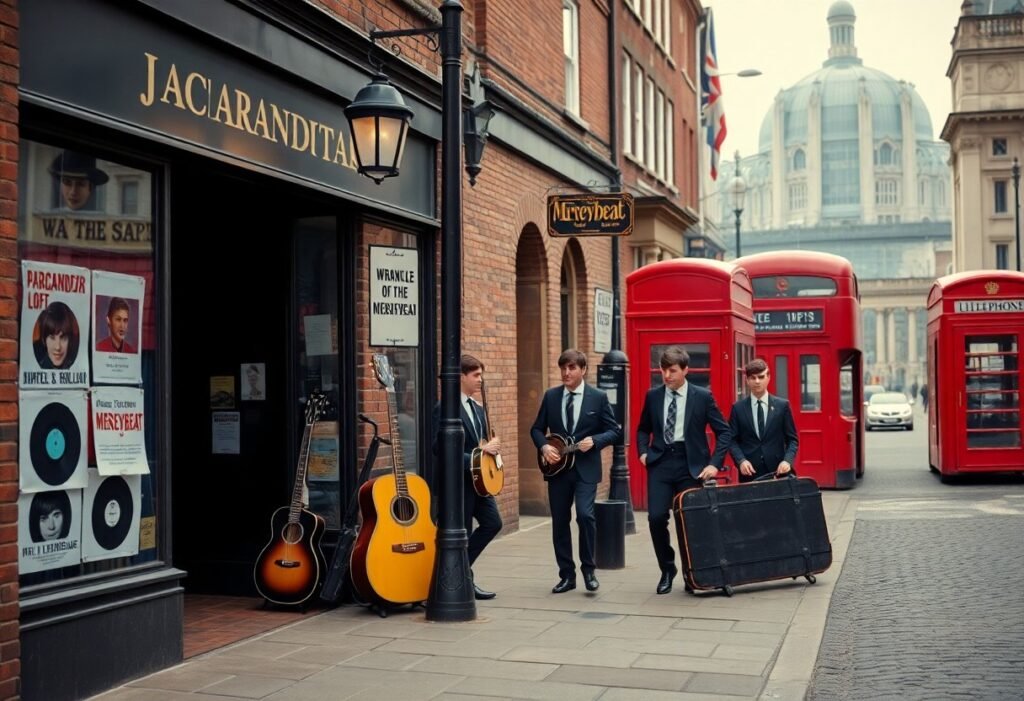
Beyond stagecraft, local bands created a circuit of residencies and promoters that taught the Beatles business sense: you learn to read an audience when you’re playing two or three sets daily at venues like the Cavern and the Jacaranda. I found that booking patterns, record-shop feedback, and rival setlists drove their song selection and ultimately attracted Brian Epstein and talent scouts who turned regional polish into international success.
The Cultural Landscape of Liverpool
I trace how Liverpool’s cultural mix – dockland cosmopolitanism, church halls, brass bands and late‑night clubs – created a continuous rehearsal space for young musicians; the Cavern Club (opened 1957) hosted the Beatles hundreds of times and the band’s Hamburg residencies (1960-62) hardened their style. If you want a concise archive, see What made The Beatles global stars? for curated examples and documents.
Socioeconomic Factors
I note how dock work, affordable housing and tight-knit neighborhoods shaped musical opportunity: many young men earned overtime that funded nights out, landlords converted basements into makeshift venues, and local record shops doubled as social hubs.
- Shift work created irregular hours that boosted evening audiences.
- Cheap lodging and cheap rehearsal space let bands rack up hours.
- Independent promoters ran dozens of small venues across the city.
Perceiving how constrained resources forced experimentation, I argue economic pressure translated into relentless gigging and a DIY ethic that sharpened performance and repertoire.
Youth Culture and Identity
I see Liverpool’s youth culture as fiercely local and outward‑looking: teenage fashions moved from Teddy Boy to Mod in the late 1950s-early 1960s, skiffle and American rock’n’roll inspired dozens of amateur bands, and the Merseybeat label gave young people a shared identity you could hear in harmonies and song choices.
I can point to concrete patterns: lunchtime Cavern sessions drew school‑leavers, local magazines and radio promoted scenes, and social spaces like youth clubs and dance halls provided steady audiences; your sense of belonging was bound up with where you danced, which records you bought, and which bands you followed night after night.
The Beatles’ Formation and Development
I trace the group’s roots from John Lennon’s 1957 Quarrymen through key additions: Paul McCartney joined after meeting John at St Peter’s church fete on July 6, 1957; George Harrison came in 1958; Stuart Sutcliffe and Pete Best rounded early lineups around 1960. By 1960 they adopted “The Beatles”; Brian Epstein became their manager in 1962, steering them from Mersey clubs to national success.
Early Beginnings of The Beatles
I focus on their skiffle-to-rock transition: the Quarrymen’s 1957 skiffle sets evolved into rhythm-and-blues and American rock covers, with a repertoire expanding to a dozen songs by 1959. You can see Paul’s bass and vocal chemistry forming quickly after he joined in July 1957, while George’s guitar chops, added in early 1958, allowed more complex arrangements that set the band on a professional path toward regular Liverpool club work.
Integration of Liverpool’s Influence
I point to Liverpool’s venues and networks: Cavern Club (they played there about 292 times), Casbah and Jacaranda provided weekly gigs and cross-pollination with bands like Gerry and the Pacemakers and The Swinging Blue Jeans. You could trace their R&B and rock vocabulary to American records offloaded at the docks and to hands-on local promoters such as Allan Williams, who booked them for early Hamburg residencies.
I add that Liverpool’s tight-knit scene trained them practically: I note how weekly club nights and afternoon rehearsals produced disciplined two- to three-hour performances, sharpening your sense of timing and audience reading. You can link Brian Epstein’s local connections-he ran NEMS and arranged their Decca audition on January 1, 1962-to the professional push that turned local favorites into a national act; that sequence shows Liverpool’s industry scaffolding at work.
The Beatles’ Worldwide Impact
I point to clear milestones that turned Liverpool roots into a global phenomenon: the Cavern Club runs and Hamburg residencies hardened their stagecraft, Brian Epstein’s 1961 management and George Martin’s 1962 production polished their sound, then a Feb 9, 1964 Ed Sullivan debut reached about 73 million U.S. viewers. You can trace that escalation in sources like How did The Beatles first gain attention and separate themselves…, which links Liverpool groundwork to mass-market breakthrough.
From Local Fame to Global Stardom
After honing eight-hour sets in Hamburg (1960-62) and playing the Cavern Club nearly 300 times, I highlight how tight musicianship and Lennon-McCartney songs made them stand out; Epstein signed them in 1961 and EMI released “Love Me Do” in 1962, then George Martin’s studio decisions amplified their reach, turning local reputations into international contracts and radio hits you recognize today.
Influencing Future Generations
When I assess influence, I point to songwriting and studio innovation: Lennon-McCartney’s 20 U.S. No.1s, Sgt. Pepper’s 1967 studio experimentation (multitrack, tape loops, ADT), and “Yesterday” becoming one of the most covered songs with over 2,200 versions. You can hear their imprint across genres from Britpop’s Oasis to alternative acts who cite them as a model for melody and production.
I’ve seen producers reverse-engineer Beatles sessions at Abbey Road and instructors use their catalog in pedagogy; Sgt. Pepper won four Grammys in 1968 and helped make the LP an art form, inspiring progressive and concept albums. You still find their techniques-unconventional song structures, studio-as-instrument approaches, bold arrangements-in contemporary records and artists framing albums as cohesive statements.
Conclusion
With these considerations I conclude that Liverpool’s tight-knit clubs, skiffle tradition, record shops, and port-driven exposure to American R&B and rock’n’roll gave the Beatles practical training, stylistic breadth, and a drive I think you can trace in their songwriting and performance – showing how a local scene can shape international artists and your understanding of musical emergence.
FAQ
Q: How did Liverpool’s club scene shape The Beatles’ live performance?
A: Liverpool’s clubs – especially the Cavern Club and the many basement dance halls – gave The Beatles long, nightly residencies that forced them to play for diverse, often impatient crowds. Those marathon sets improved their timing, stamina, tightness as a band and ability to read an audience, while frequent gigs encouraged experimenting with song arrangements, harmonies and stagecraft. Regular competition with other local acts pushed them to raise standards, broaden their repertoire and develop a high-energy, crowd-pleasing delivery that became a hallmark of their live shows.
Q: What musical influences available in Liverpool helped form The Beatles’ sound?
A: As a busy port city, Liverpool had exceptional access to American rock ‘n’ roll, R&B, blues and country records brought in by sailors and imported stock, giving young musicians exposure to styles that weren’t as easily available elsewhere in Britain. The skiffle craze provided an entry point for many local players before they absorbed electric rock and rhythm-and-blues; local bands mixed those influences into the distinctive Merseybeat style. Close-knit circles of musicians, record shops and jukebox culture meant ideas traveled fast, so The Beatles could blend American influences with British pop sensibilities and each member’s individual tastes.
Q: In what ways did Liverpool’s music industry and fan culture help The Beatles break out nationally and internationally?
A: A passionate local fanbase, active local press (like Mersey Beat), and promoters created a visible scene that made it easy for managers and agents to spot promising acts. That local momentum attracted Brian Epstein, who saw their commercial potential and refined their image and bookings; the network of promoters and contacts then helped secure club residencies in Hamburg and recording opportunities. Local shops, rehearsal rooms, compères and radio exposure all formed an ecosystem that tested, promoted and professionalized the band, turning local success into the platform for national and then global breakthroughs.