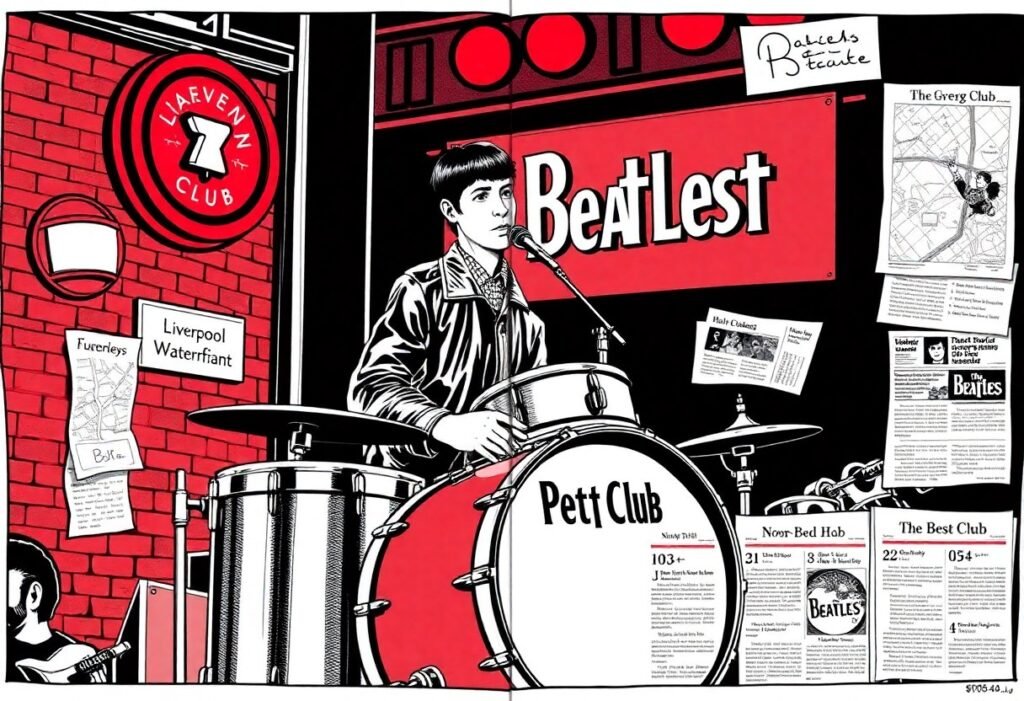

You can follow a clear path I’ve developed to study Pete Best, starting with primary sources, interviews and Liverpool club archives so you can form your own view of his pre-fame role; I’ll point you to imperative recordings, contemporary press, fan testimonies and reliable biographies, explain how to verify claims, and suggest ways to contextualize his influence within early Beatles history.
Understanding Pete Best
I look at key facts: born 24 November 1941 in Madras, India, Pete Best became the Beatles’ drummer from 1960-1962, anchoring the group during intensive Liverpool and Hamburg work. You can see his footprint on the Decca audition (1 January 1962) and the Polydor/Tony Sheridan sessions, and I weigh his extensive live experience-residencies at the Indra and Kaiserkeller-against the studio era that followed.
Early Life and Background
I note Pete’s birth on 24 November 1941 in Madras and the family’s move to Liverpool, where his mother Mona opened the Casbah Coffee Club in 1959. You’d see him honing a raw, driving style there, backing skiffle and rock sets on a borrowed kit, and building the stage stamina that led to his joining the Beatles’ lineup in 1960.
Role in The Beatles
I emphasize that he joined as drummer in August 1960 and stayed through the group’s formative Hamburg residencies and Cavern Club nights. You should know he played the Decca audition (1 January 1962), appeared on early Tony Sheridan/Polydor recordings, and was dismissed in August 1962, replaced by Ringo Starr before the Abbey Road sessions that launched the band’s hit-record era.
I add that Best logged hundreds of live performances, sharpening tempo and fills during extended runs at venues like the Indra, Kaiserkeller and the Cavern. For example, the late-1960 Hamburg residencies forced a six-night-a-week schedule and expanded their repertoire dramatically, illustrating why his live experience mattered even if he missed the later studio breakthroughs.
How to Explore Pete Best’s Journey
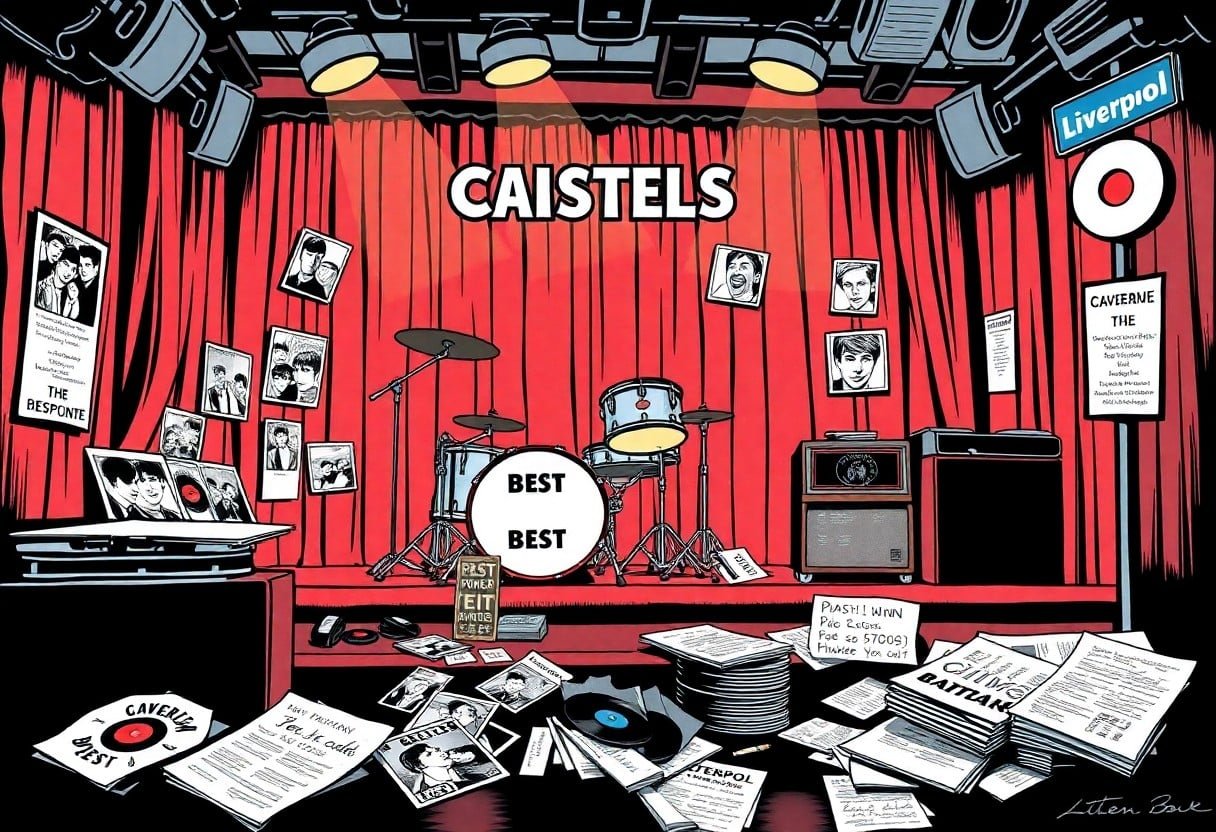
I trace Pete Best’s story by focusing on the 1960-1962 period: his Hamburg residencies, Cavern Club nights, the 15-song Decca audition on January 1, 1962, and his dismissal in August 1962; you can deepen that research with contemporary analysis such as Pete Best | Founding Drummer Contributions to The Beatles which highlights his stylistic impact on the early Beatles sound. I recommend mapping timelines and set lists to understand his role.
Researching Biographies and Documentaries
I start with primary accounts and then cross-check: Pete Best’s own interviews, archival newspaper pieces from Liverpool Echo, and Beatles Anthology (1995) for contemporary context; you should compare those with independent biographies and oral histories that document dates, venues, and band dynamics between 1960 and 1962 to separate myth from verifiable events.
Listening to His Music and Performances
I listen to the Decca audition tapes (15 tracks, Jan 1, 1962), surviving Hamburg and Cavern Club recordings, and circulating live bootlegs to hear his feel and choices; you can contrast those with later studio work to isolate what he contributed rhythmically and where the band’s sound shifted after August 1962.
For deeper listening I pull specific sources: compare the Decca audition takes to contemporary Hamburg sets to note tempo choices, snare tuning, and fills; analyze several versions of the same song to track how his backbeat supported the group, and consult session logs and eyewitness accounts to date performances and lineups for precise attribution.
Tips for Engaging with The Beatles’ History
I focus on mixed methods: archival sources, site visits, and conversations with collectors. For example, I compare Hamburg setlists from 1960-61 with BBC session logs and Pete Best interviews to spot differences. Attend Cavern Club nights, take the Magical Mystery Tour, and read contemporaneous NME issues from 1962 to verify claims. Cross-referencing discographies and fan-club catalogs sharpens timelines. Knowing how to cross-check sources prevents you accepting myths.
- Visit Liverpool sites and Hamburg venues to match physical evidence to stories.
- Scan and date press clippings, tickets, and posters to build timelines.
- Listen to BBC session logs, bootlegs, and original acetates for audio comparison.
- Consult authoritative works like Mark Lewisohn alongside primary interviews.
Visiting Key Locations
I plan visits around opening times to avoid crowds and maximize archival access. At Mathew Street I study Cavern Club photos and compare early setlists; Penny Lane’s signs and Strawberry Field-opened as a visitor center in 2019-offer contextual displays I use to link lyrics and geography. In Hamburg I trace the Reeperbahn clubs and compare venue posters from 1960-62 to confirm when Pete Best played key nights.
Joining Online Forums and Communities
I join Reddit’s r/Beatles (over 300,000 members), BeatlesForum.com and TheBeatlesBible threads to ask specific questions-like dates for Pete Best’s Hamburg appearances or BBC audition logs. You can post scans, request verification of session dates, and follow cataloging threads that assemble photos and setlists from 1960-63. Active discussions often cite primary sources so your queries get concrete answers.
I usually lurk first to learn each forum’s rules, then search existing threads for dates or scans before posting. When I contribute I attach high-resolution images of ticket stubs, cite Mark Lewisohn or original NME/BBC sources, and timestamp files so others can verify provenance; using clear titles and tags increases responses and helps you build a reliable, evidence-based picture of Pete Best’s early role.
Factors Influencing Pete Best’s Legacy
I weigh timing, recordings and narrative control: Pete appears on the Decca audition (1 January 1962), played across the Cavern Club-about 292 appearances-and honed the band’s endurance during Hamburg residencies in 1960-62, yet his replacement by Ringo Starr on 16 August 1962 altered access to EMI sessions and mainstream exposure. I track how later releases, collector tapes and fan scholarship reframe those gaps, and you can trace shifts in reputation through press archives and setlist comparisons. The interaction of these elements shapes his enduring reputation.
- Key dates: Decca audition (1 Jan 1962), replacement (16 Aug 1962)
- Performance footprint: Hamburg residencies and ~292 Cavern shows
- Recorded evidence: early demos, BBC and collector tapes
- Narrative forces: contemporary press, later anthologies, fan communities
Public Perception and Media Representation
I chart how media framing shifted public views: initial 1962 coverage often personalized the split while later documentaries and the 1995 Beatles retrospectives reopened debate, prompting you to reassess headlines against archival audio and eyewitness accounts; I rely on press clippings, television interviews and collector releases to show how portrayal moved from dismissal to revival.
Impact on the Beatles’ Formation
I emphasize Pete’s role in tightening the group during 1960-62: his steady backbeat at marathon Cavern and Hamburg sets, plus presence on the Decca audition, helped solidify repertoire, tempo choices and live endurance that shaped the band’s early identity.
I examine contrasts in rhythmic approach: Pete’s straightforward fills sustained long club sets, while Ringo’s later syncopation and studio adaptability-illustrated on early singles and the Andy White session-shifted arrangement possibilities; comparing surviving tapes and setlists reveals how that transition changed song dynamics and studio strategy.
How to Compare Different Perspectives
| Aspect | My approach |
|---|---|
| Primary sources (1960-62 press, set lists, tapes) | I prioritize contemporaneous documents and cross-check dates, noting when memories were recorded years later. |
| Eyewitness vs memoirs | I weigh early interviews more heavily and treat memoirs as interpretive narratives that need corroboration. |
| Scholarly books vs fan accounts | I favor well-sourced biographies (check citations and archives) but scan fan threads and groups like The Beatles before Ringo, with Pete Best as drummer 🥁🐞❤️ for leads and photos to verify. |
| Audio/film evidence | I analyze filmed performances and audio separately, noting tempo, fills, and lineup to reconcile contradictions. |
Reading Diverse Author Analyses
I compare chapter focus, citation depth, and archival usage across authors: for example, I check how many primary sources a biographer cites, whether they reference 1960-62 Cavern dates, and how they resolve conflicting eyewitness accounts; you should map disagreements by page and source so you can see which narrative rests on contemporaneous evidence versus later recollection.
Watching Interviews and Commentary
I watch archival TV clips, bandmate interviews, and modern documentaries side‑by‑side, noting date stamps and interviewer prompts; I mark where recollections diverge and where film evidence-stage layout, drum position, tempo-supports one account over another so you can judge reliability rather than accept a single telling.
When I dig deeper I timestamp every segment that mentions Pete, slow the footage to check drumming patterns and limb movement, and compare those observations to studio or live audio waveforms; I also track contextual clues-venue, crowd noise, clothing-that anchor a clip to a specific gig, and I flag any commentator who leans on unverifiable anecdotes so your synthesis relies on verifiable, timestamped evidence.
Engaging with Pete Best Today
I follow Pete Best for verified dates and discography; born 24 November 1941 and dismissed from The Beatles in 1962, he still performs, gives interviews and releases music, so I track tour announcements, recent releases (e.g., Haymans Green, 2008) and charity appearances to plan whether I’ll attend live shows or join online Q&As.
Connecting with His Current Projects
I subscribe to his official mailing list and follow his band and solo social pages, checking 2-3 times weekly for studio updates, rehearsal clips and release notices; I support limited-run vinyl or CD reissues and use artist pages or Bandcamp storefronts to purchase signed items and find verified gig listings.
Attending Events and Conventions
I go to Liverpool’s Beatle Week and international conventions where Pete joins panels, signings and occasional performances; I buy VIP or meet‑and‑greet tickets when available and set aside £50-£150 for entry and memorabilia so I’m ready for album signings or photo ops.
When I plan attendance I check event schedules months ahead, reserve hotels near venues and pre-buy VIP passes to guarantee access; I bring pre‑selected items in protective sleeves, prepare two concise questions, carry cash for solo vendors, and arrive early to secure a front-row spot or a short queue for autographs-that approach has let me get signed drumsticks and clear photo opportunities at past conventions.
Summing up
Summing up, I recommend beginning with primary sources-interviews, contemporary press and archival footage-then cross-checking biographies and fan research so you form an evidence-based view; I urge you to explore museum exhibits and scholarly work so your understanding of Pete Best, the Beatle before the fame, is grounded, balanced and informed.