


This short guide shows how I break down Paul McCartney’s bass approach into simple, practical tips you can apply immediately. I focus on melodic movement, tasteful fills, pocket timing, and tone-demonstrating exercises and listening habits that build your ear and feel. With clear step-by-step practice ideas and song-based examples, you’ll develop the musical instincts to play with the phrasing and groove that define McCartney’s iconic style.
Understanding the Bass Guitar
I break down how the instrument’s anatomy shapes tone: a 34″ scale (standard) versus a 30.5″ short-scale changes string tension and feel, pickups (split-coil P vs single-coil J) color the midrange, and neck profile affects fretting comfort; I have you try different string gauges (.045-.105) and play melodic lines to hear the differences.
Types of Bass Guitars
I cover five common types you’ll encounter so you can choose purposefully: short-scale hollowbodies like the Höfner for warmth, Fender Precision for punchy roots, Jazz for clarity and runs, Rickenbacker for treble presence, and modern 5-strings/active basses for extended low range-so I ask you to compare attack, sustain, and neck feel.
| Fender Precision (P) | 34″ scale, split-coil pickup, punchy midrange; favored for steady foundational tone in rock and pop. |
| Fender Jazz (J) | 34″ scale, two single-coils, brighter top end and narrower neck for faster fingering and melodic fills. |
| Höfner 500/1 (Violin) | 30.5″ short-scale, hollow body, warm and thumpy tone; McCartney’s iconic choice for Beatle-era sound. |
| Rickenbacker 4000-series | ~33.25″ scale, distinctive ringing treble and sustain; suits cutting, melodic bass lines in classic rock. |
| 5-String / Active | Adds low B and onboard preamp (battery-powered); extends range and offers EQ shaping for modern styles. |
- Short-scale: easier fretting, rounder low end, great for vintage-style melodic parts.
- P-Bass: strong low-mid punch, ideal for locking with kick drum and holding the root.
- J-Bass: articulate highs and growl when played with fingers or pick, useful for fills and runs.
- Rickenbacker: bright, chiming presence that helps solos and melodic hooks cut through a mix.
- After you try several, note which neck, weight, and pickup response keep you playing longer.
Choosing the Right Bass for You
I recommend testing three types: a Höfner 30.5″ short-scale for warm, McCartney-like tone, a Fender Precision or Jazz (34″) for versatility, and a 5-string active if you need low B; I tell you to play each for 10-15 minutes to judge comfort, tone, and how your technique adapts.
In practice I weigh budget and setup: entry-level Squier or Yamaha models can be under $300 and become great after a $50-$120 setup, midrange Fender Player Series sits around $700-$900 for reliable factory playability, and used Höfners or Rickenbackers often run $1,200+; I have you factor in strings ($10-$20), a pro setup, and how each instrument supports the melodic bass lines you intend to learn.
Essential Techniques for Beginners
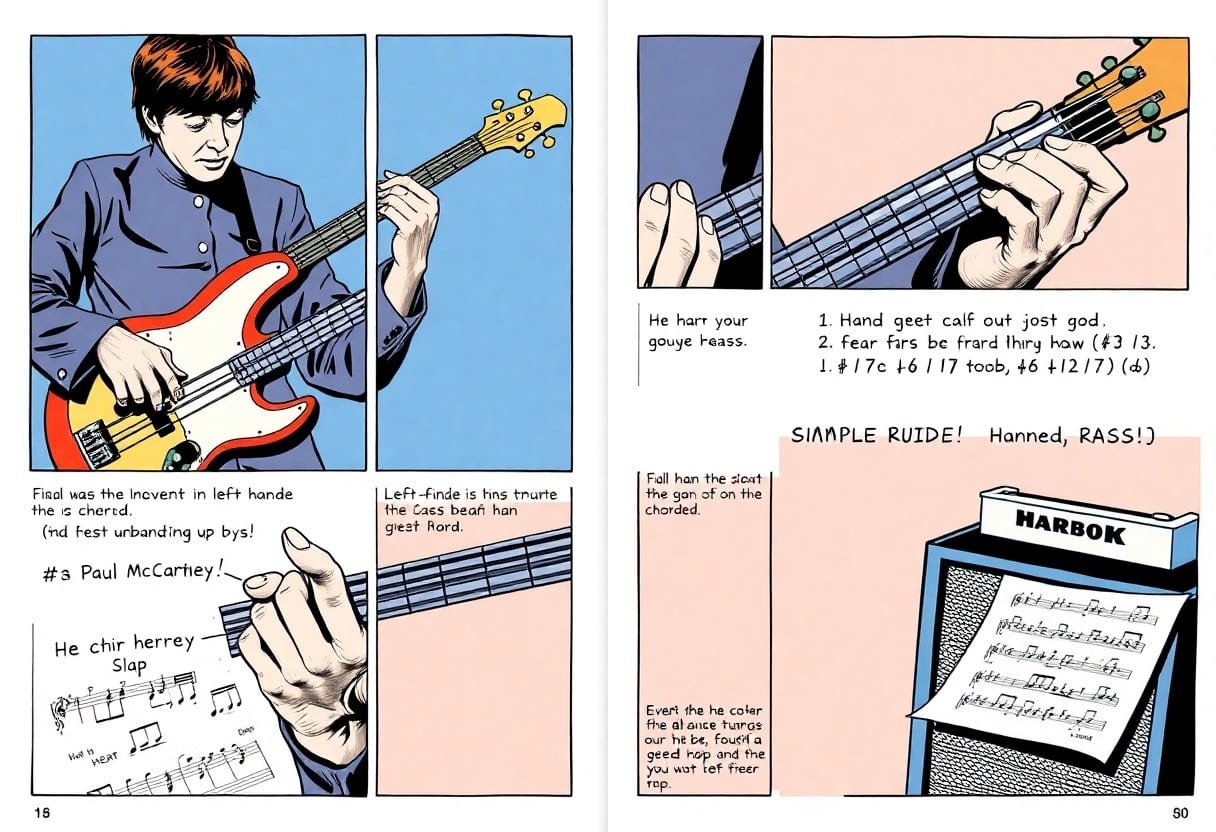
I emphasize three basics you should drill: locking rhythm with a metronome, clean fretting, and consistent right-hand attack. Practice 15 minutes daily with a metronome starting at 60 BPM, increasing by 5-10 BPM when you can play a 4-bar line cleanly at 90-120 BPM. Work on 1-2 mm string clearance from the fret to avoid buzz, mute with your palm when needed, and transcribe two McCartney lines per week to internalize melodic bass movement.
Proper Finger Placement
I place my thumb behind the neck near the middle of the back to give your fingers leverage, keeping the fretting hand relaxed and the knuckles angled slightly. Use fingertips, not pads, and stop an index or middle finger about 1-2 mm from the fretwire to minimize buzz. Practice hammer-ons and pull-offs slowly, aiming for clear notes at 60 BPM, then raise tempo in 5-10 BPM steps while reducing finger motion.
Picking vs. Plucking
I switch between a pick and fingers depending on the song: a medium pick (.73-1.0 mm) gives sharper attack and better string-to-amp articulation for fast eighth-note parts at 140+ BPM, while finger plucking offers warmer tone and finer dynamic control for melodic fills. Try both on the same line and A/B them at 100 and 140 BPM; your ears will tell which sits better in the mix.
I pay attention to attack point and technique: picking closer to the bridge (≈1-2 cm) adds brightness, while plucking with the fingertip near the neck gives rounder low end. For pick players, angle the pick 10-20° to reduce chirp; for finger players, alternate index and middle at a 1:1 ratio and use thumb anchoring on the pickup rim for consistency. Practice 4-bar grooves at 8-16th-note subdivisions to dial in tone and timing.
Grooving Like McCartney
To groove like McCartney, I prioritize pocket, melodic movement and tasteful space-his bass often doubles or answers the vocal, as on “Come Together” or the underlying riff that supports “Hey Jude.” I focus on locking with the kick while leaving room for vocals, inserting passing notes and syncopation sparingly. Practicing 15-30 minutes daily with a metronome at 60-100 BPM helps me internalize his balance of simplicity and melodic invention.
Developing a Strong Rhythm
When developing a strong rhythm, I lock to the drummer’s kick and snare in 4/4, subdividing into eighths and triplets to feel pulse and syncopation. I use a routine: 5 minutes of quarter notes, 10 minutes of syncopated patterns, and 10 minutes with a click from 60 to 120 BPM. You should mute for percussive notes, practice against drum loops, and check accents to cement timing and pocket.
Playing with Feel and Emotion
I use dynamics, note length and tiny timing shifts to inject emotion; McCartney’s lines often swell or breathe with the vocal. You can play slightly behind the beat by a few milliseconds-about 20 ms-for warmth, slide into chord tones for longing, and shorten notes to add punch. Small adjustments in attack and sustain change the entire mood.
For more depth, I transcribe 5-10 McCartney bass lines, slow them to 60% speed, and copy phrasing, slides, rests and dynamics. You should sing the vocal while playing to uncover counter-melodies, record practice sessions to compare timing, and tweak tone-round low mids for ballads, brighter attack for rock-to match the emotion you want to convey.
Influences on McCartney’s Style
I trace McCartney’s voice-and-bass approach to skiffle roots, Motown grooves, and his early piano training, which gave him strong melodic instincts; his bass often mirrors or answers the vocal line. For a focused look at that vocal-plus-bass relationship I point you to Blog: Sing and Play Bass Like Paul McCartney, which dissects phrase choices and doubling techniques.
Musical Genres and Elements
He blends rock ‘n’ roll drive, Motown pocket, and occasional jazz phrasing; I emphasize stepwise melodic runs, octave jumps, and syncopated anticipations. You should practice arpeggiated fills, chromatic approach notes, and sustained tonic tones to mimic his harmonic framing-work in 8- and 16-bar chunks to internalize how he shapes phrases across song sections.
Notable Songs to Study
Study “Day Tripper” for riff economy, “Paperback Writer” for propulsive eighths, “Come Together” for deep pocket (≈84 bpm), “Hey Jude” for supportive simplicity, and “Michelle” and “Something” for lyrical melodic fills. I pick these because they showcase his range from groove anchors to singing bass lines.
When I work these songs I transcribe the first 16 bars, loop 4-bar phrases, and practice at 50% tempo before increasing in 10% steps; focus one week on timing, one week on tone/muting, and one week on melodic variation-this method builds practical application quickly.
Practicing Effectively
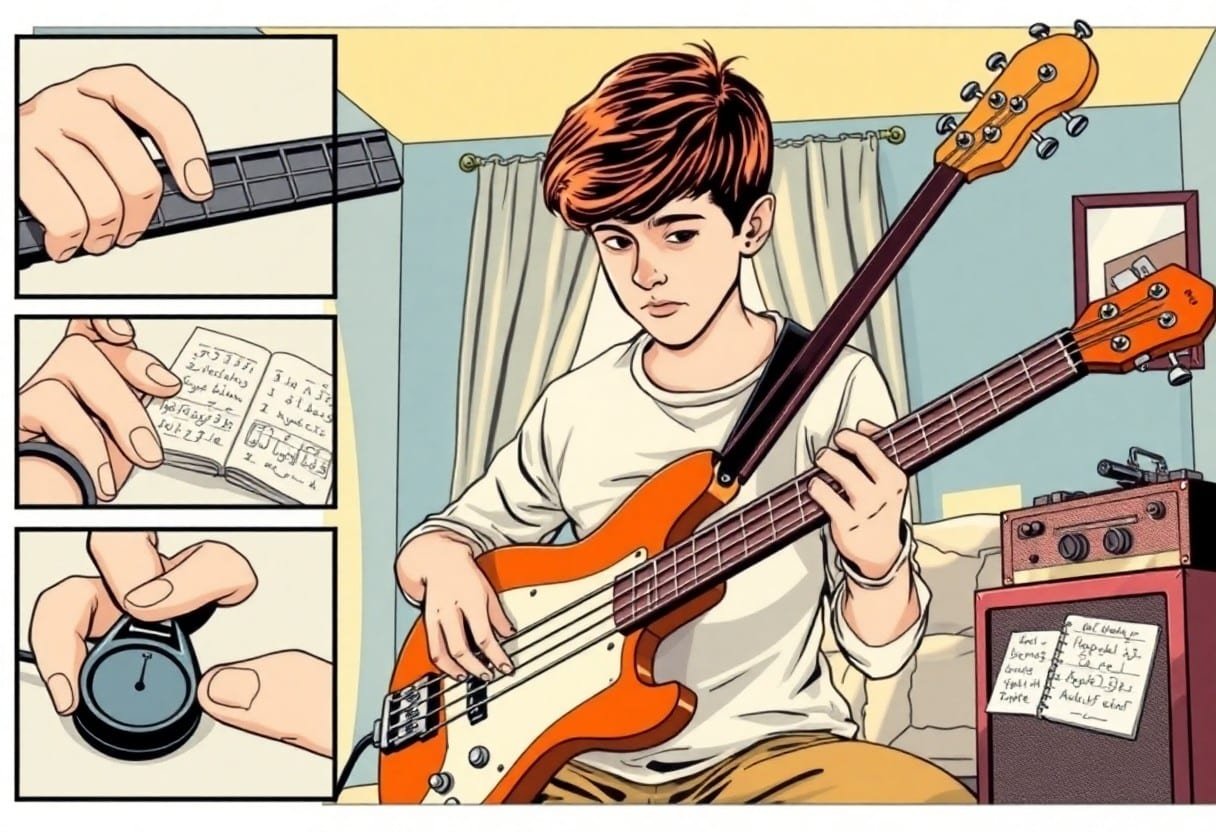
I split practice into focused blocks: 5-10 minutes warming fingers, 15-20 minutes on technique (scales, thirds, octave-jumps), and 15-20 minutes transcribing or playing songs. I set a metronome from 60-120 BPM, loop 4-bar phrases, and aim to learn two full McCartney-style lines per week. I also consult threads like How to get a melodic bass playing like Paul McCartney for melodic ideas and analysis.
Creating a Practice Routine
I recommend a 30-45 minute daily routine: 5-10 minutes warmup, 10-15 minutes technical drills (alternate plucking, slides, octave exercises), 10-15 minutes song study, and 5 minutes free improvisation. I track progress with a simple checklist and focus one week on timing, the next on melody-this cyclical approach helps you build pocket and melodic reflexes faster.
Utilizing Online Resources
I use online tools to accelerate learning: slowed-down YouTube clips at 0.6-0.8x, tabs from Songsterr or Ultimate Guitar for reference, and lesson channels like Scott’s Bass Lessons for technique breakdowns. I practice by isolating 4-bar motifs, looping them, and comparing my transcription to published basslines to close gaps quickly.
For deeper study I employ Transcribe! or Amazing Slow Downer to reduce speed and loop sections, set loops of 2-4 bars, and mark timestamps for tricky fills; I’ll slow “Something” to 60% and loop the bridge until I can play it at full tempo. I also download MIDI or tab files to analyze note choices and intervals, which reveals McCartney’s frequent use of stepwise motion and octave leaps.
Tips for Playing with a Band
I lock to the kick, shape dynamics, and give vocals room; I also use rehearsed cues and simple patterns:
- Anchor ballads on beats 1 and 3
- Use octaves or pedal tones in choruses
- Simplify fills during solos
Study transcriptions like How to play bass like Paul McCartney. This keeps arrangements clear and steady for your band.
Listening and Communicating
I keep my ears on the drummer’s hi-hat subdivisions, count 8-bar phrases, and call transitions with eye contact; when the snare tightens I drop to root notes to steady tempo. I cue dynamics-soften by about 6 dB in verses, push +3 dB in choruses-and you should signal changes visibly so the band moves together.
Adapting Your Style
I choose note density and tone to fit the arrangement: in pop choruses I play roots and octaves, in singer-songwriter parts I add thirds and 1-2 melodic passing notes per bar, and on groove tracks I lock to 16th-note subdivisions; when space is required I opt for single sustained notes with finger attack.
I practice targeted exercises: drill major/minor arpeggios, run chord tones (1, 3, 5, 7) across common keys, and transcribe 10 signature McCartney lines to expand vocabulary. I also A/B finger vs pick and flatwound vs round strings to hear which setting sits best in the band’s frequency range.
Final Words
From above I condensed McCartney’s approach into bite-sized habits: focus on melody, lock with the drums, keep a steady pulse, and serve the song. I advise you to practice simple lines, learn songs by ear, and prioritize tone and timing over flash. If you develop patience and listening skills, your bass will support songs the way Paul’s does, with musicality and confidence.